Is getting a health scan for my new job's benefits enrollment easy and quick?
How benefits enrollment health assessment ease shapes participation, what consumers expect from a new-hire health scan, and what carriers and consultants should know.
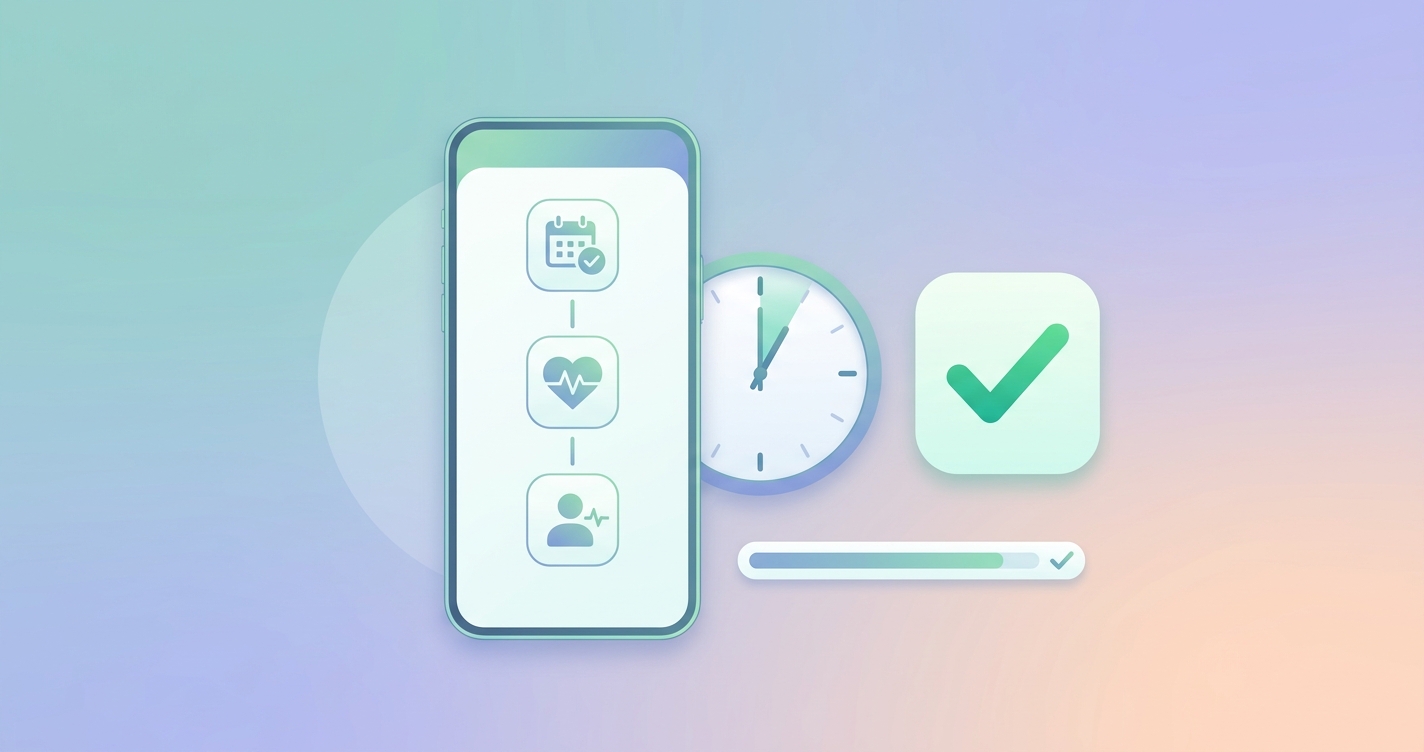
A new hire who just accepted a job offer is rarely thinking about underwriting models or risk pools. They are thinking about one practical question: will the health scan attached to my benefits enrollment take ten minutes or ten days? That question, repeated across millions of onboarding events each year, has quietly become one of the most important variables in group benefits design. Benefits enrollment health assessment ease is no longer a soft, nice-to-have feature. It is the difference between a program that captures clean population data and one that stalls at the first sign of friction. For the carriers, third-party administrators, and benefits consultants building these programs, the consumer's tolerance for hassle is now a hard design constraint.
Roughly 20 percent of employees describe the benefits enrollment process as confusing, according to the 2024 Corebridge Open Enrollment Survey, and the 2025 MetLife Employee Benefit Trends Study found that 38 percent struggle to understand their company's benefits communications, a six-point jump from the prior year.
Why benefits enrollment health assessment ease drives participation
The honest framing for any benefits professional is that employees vote with their attention span. Research from the Employee Benefit Research Institute (EBRI) found that roughly half of plan enrollees spend less than one hour total selecting a plan during open enrollment. If a health assessment is bolted onto that process and demands a clinic appointment, a fasting blood draw, or a multi-page paper form, it competes directly against an attention budget that is already nearly exhausted. The result is predictable: incomplete assessments, abandoned enrollments, and a population data set riddled with gaps.
Benefits enrollment health assessment ease matters because the scan is usually not the reason the employee showed up. They are there to pick a health plan, set up a dependent, or activate group life coverage. The health assessment is a step inside a larger transaction. When that step is fast, mobile, and self-guided, it disappears into the flow of onboarding. When it is slow, it becomes the thing the employee remembers and complains about, and it drags down satisfaction with the entire benefits package.
A useful way to understand the consumer's experience is to compare how a health scan feels across different delivery models. The same biometric data can be collected in ways that feel effortless or exhausting depending on the format.
| Assessment model | Typical time to complete | Where it happens | Common friction points | Perceived ease |
|---|---|---|---|---|
| Traditional clinic blood draw | 3 to 10 days from scheduling to result | Off-site lab or clinic | Appointment scheduling, fasting, travel, time off work | Low |
| On-site screening event | 15 to 30 minutes on the day | Employer worksite on set dates | Fixed dates, lines, no-shows, missed if remote | Medium |
| Paper health questionnaire | 20 to 40 minutes | Home or desk | Manual entry, illegible forms, re-keying errors | Low to medium |
| Phone or app-based digital scan | 2 to 10 minutes | Anywhere, any device | Requires smartphone, network connection | High |
The pattern is clear. The models that win on perceived ease are the ones that remove scheduling and travel from the equation entirely. This is consistent with broader enrollment research showing that 68 percent of employees want simpler, more straightforward benefits communication and 66 percent wish their employer would help them understand their benefits better. Ease and clarity are the same demand expressed two ways.
What employees actually want from a benefits health scan tends to cluster around a short list of expectations:
- Speed measured in minutes, not days or appointments
- The ability to complete it from a personal phone at home
- No fasting, no needles, and no trip to a lab when avoidable
- Clear language about what the scan measures and why it is needed
- Confidence that results will not be surprisingly shared with a manager
- A single continuous flow rather than a separate task to remember later
Industry applications across the group benefits stack
The desire for a seamless experience plays out differently depending on which part of the benefits stack is collecting the data. Understanding these contexts helps consultants set realistic expectations with clients.
New-hire onboarding
Onboarding is the highest-use moment because the employee is already completing a sequence of digital forms. A health assessment embedded in that sequence inherits the momentum of the broader process. The risk is overloading a new employee in week one, so the assessment has to be genuinely brief. When it is, completion rates during onboarding tend to outperform standalone screening campaigns sent weeks later.
Open enrollment and voluntary benefits
During annual enrollment, the health scan often supports voluntary benefits and simplified group life decisions. Here the assessment competes with dozens of other decisions packed into a short window. Ease is the deciding factor in whether the employee finishes or defers. A voluntary benefits health scan that fits inside the existing enrollment platform avoids the drop-off that occurs whenever an employee is asked to leave one system and start another.
Wellness program activation
For ongoing wellness initiatives, the assessment frequently repeats annually. Employees who had a frustrating first experience are far less likely to return the next year, which erodes the longitudinal data that makes population health programs valuable. First-impression ease compounds over time.
Current research and evidence
The data on benefits comprehension and friction has been moving in the wrong direction even as digital tools proliferate. The 2025 MetLife Employee Benefit Trends Study reported that 38 percent of employees struggle to understand their company's benefits communications, up six points year over year, and separate post-enrollment surveys cited in 2025 industry reporting found that as many as 86 percent of employees still wrestle with basic benefits literacy. The 2024 Corebridge Open Enrollment Survey put the share who find enrollment outright confusing near 20 percent, and roughly 35 percent of employees admit they do not fully understand the benefits they selected.
There is also a clear signal that employees want human reassurance alongside digital convenience. Aflac research reported by HR Dive in 2025 found that nearly 37 percent of employees want to speak with a real person during enrollment, while only about 28 percent of employers offer that option. The implication for health assessments is subtle but important: ease is not only about speed. It is about confidence. A scan that takes two minutes but leaves the employee uncertain about what was measured or who will see it does not actually feel easy. The 2025 work from Businessolver on enrollment user experience makes a parallel point, arguing that the right interface design drives right-fit decisions rather than simply faster clicks.
Taken together, the evidence suggests that perceived ease is a combination of three things: low time cost, low logistical burden, and high clarity. A program that nails speed but fails on clarity will still generate confusion-driven drop-off.
The future of benefits enrollment health assessments
The direction of travel is toward assessments that the employee barely registers as a separate task. Several shifts are already visible in how programs are being designed for 2026 and beyond:
- Phone-based and contactless biometric capture that removes the lab visit for a growing share of measurements
- Tighter integration with benefits administration platforms so the scan lives inside the same screen as plan selection
- Progressive data collection that asks for a little at a time rather than one long questionnaire
- Plain-language explanations and privacy disclosures presented at the moment of capture rather than buried in a packet
- Year-over-year continuity so returning employees confirm and update rather than start from scratch
For carriers and administrators, the strategic takeaway is that ease is now an underwriting input, not just a marketing talking point. The cleaner and more complete the data set, the more confidently a population can be priced. A frictionless health assessment is therefore both a consumer satisfaction lever and a data quality lever at the same time. Programs that treat the two as connected, rather than trading one for the other, are the ones positioned to scale.
Frequently asked questions
How long does a benefits enrollment health scan usually take?
It depends entirely on the model. A traditional clinic blood draw can stretch across several days once scheduling and travel are counted, while a phone or app-based digital scan is often completed in two to ten minutes from home. The trend across group programs is toward the faster, self-guided formats because they protect completion rates.
Do I have to visit a clinic or get a blood test for my new job's benefits?
Increasingly, no. Many group programs now offer digital or contactless assessments that capture biometric signals without a lab visit, reserving clinical draws for specific underwriting situations. Whether a blood test is required depends on the carrier, the coverage type, and the coverage amount being requested.
Will my employer see my health scan results during enrollment?
In well-designed programs, individual results flow to the carrier or administrator and not to the employer in identifiable form. Employers typically receive only aggregate, de-identified data. Employees concerned about this should ask the benefits team directly, since clarity on data handling is a major driver of whether the process feels trustworthy.
Why do benefits teams care so much about making the scan easy?
Because ease directly determines participation, and participation determines data quality. Incomplete assessments produce gaps that weaken both wellness programs and underwriting accuracy, so a smoother employee experience is also a cleaner data set for the carrier.
Circadify is building toward exactly this kind of low-friction, phone-based biometric assessment for group enrollment and wellness programs, designed to fit inside the onboarding flow rather than interrupt it. Benefits consultants, carriers, and administrators evaluating how a seamless health scan could lift participation and data quality can explore the enterprise pilot program to see how scalable screening fits their populations.