What kind of health information does my employer get from a 60-second health check?
A clear breakdown of employer biometric screening data: what aggregated, de-identified reports show employers versus the private results that stay with employees.
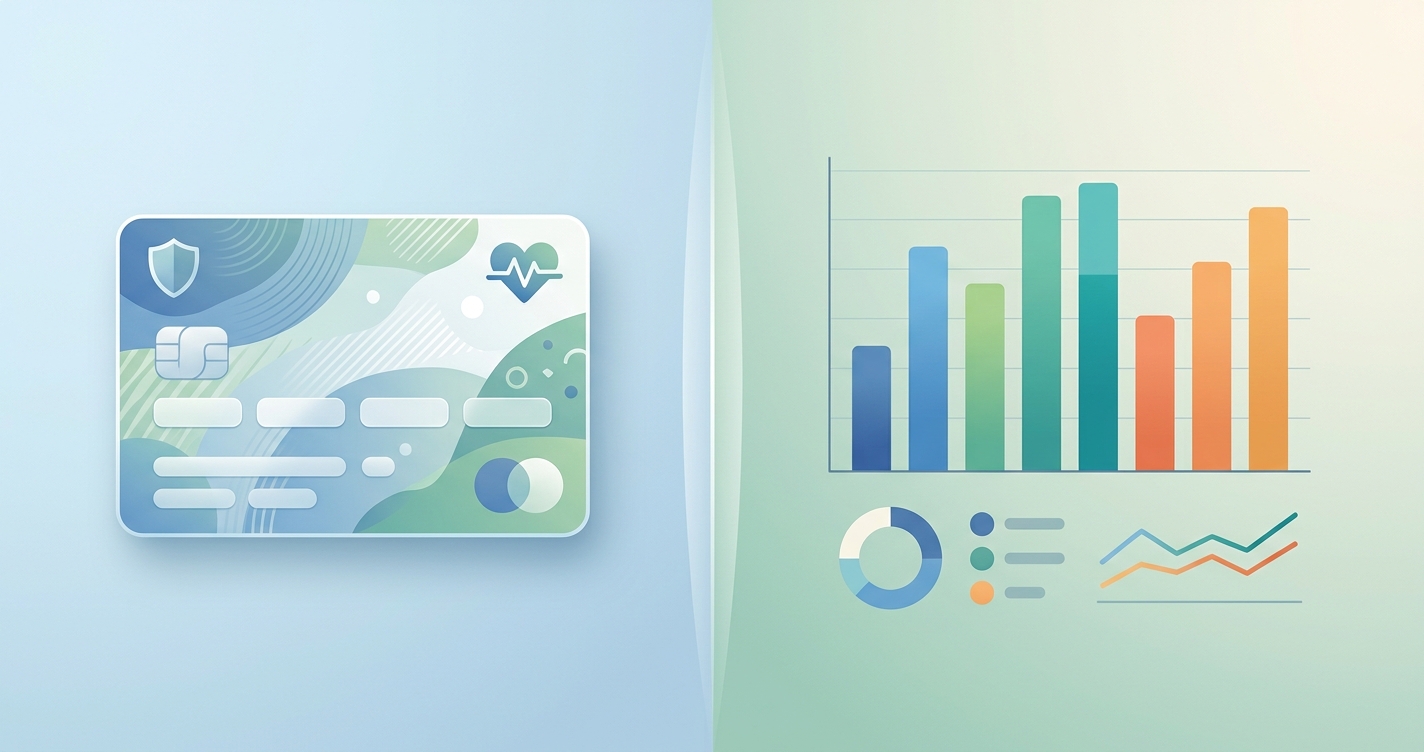
When an employee finishes a 60-second health check at open enrollment, the question that follows is almost always the same: who actually sees this? The answer matters as much to the carriers and administrators running these programs as it does to the worker in the chair. The structure of employer biometric screening data is what separates a defensible, high-participation program from one that collapses under privacy objections. Employers do not receive a roster of individual blood pressures, glucose readings, or body composition scores. They receive aggregated, de-identified summaries built from many participants at once, while the individual result flows back privately to the person who took the scan. For TPA administrators and group carriers, understanding exactly where that line sits is the difference between a program employees trust and one they quietly boycott.
"If an employer only receives de-identified or aggregated results, such as participation counts or risk categories without individual identifiers, HIPAA obligations typically do not attach to the employer program.", U.S. Department of Health and Human Services, Office for Civil Rights, de-identification guidance
What employer biometric screening data actually contains
The core principle is a separation of audiences. The individual screening result is personal health information that belongs to the employee and, where the program is tied to a group health plan, is governed by the HIPAA Privacy Rule. The employer-facing report is a different document entirely. It is a statistical rollup describing the population, not the person.
A properly built aggregate report answers questions about the group: what share of the workforce falls into an elevated blood pressure band, how cholesterol distributions shifted year over year, what percentage of participants are flagged for follow-up. It does not answer questions about a named individual. The U.S. Department of Health and Human Services (HHS) sets two recognized paths to de-identification under the HIPAA Privacy Rule: the Safe Harbor method, which requires removing 18 specific identifiers such as name, address, and dates, and the Expert Determination method, in which a qualified statistician certifies that the risk of re-identification is very small.
The practical mechanism most vendors use is cell-size suppression. If a report segment, for example a single small department, contains too few people to safely anonymize, the values are suppressed or rolled up into a larger group. This is why a 12-person field office will not appear as its own line item with a diabetes rate next to it.
| Data element | Individual result (private to employee) | Employer aggregate report |
|---|---|---|
| Names and identifiers | Included, visible to the employee | Removed under Safe Harbor or expert determination |
| Specific biometric values | Full readings (BP, glucose, lipids, BMI) | Distributions and percentages only |
| Risk categorization | Personal risk flags and guidance | Group-level prevalence bands |
| Smallest reporting unit | The individual | Suppressed below minimum cell size |
| Trend data | Year-over-year personal change | Population-level shift |
| Permitted uses | Personal health decisions | Program design, wellness ROI, risk-pool insight |
The distinction is not a courtesy. It is built into how compliant programs are designed from the first data field.
What employers can and cannot do with the data
For benefits teams evaluating a screening partner, the useful framing is to separate permitted uses from prohibited ones.
What aggregate data supports:
- Designing wellness interventions targeted at the most common population risks.
- Measuring program effectiveness and participation over time.
- Informing benefit plan design and vendor selection.
- Supplying carriers and stop-loss partners with population risk context for pricing.
What the data structure prevents:
- Identifying any single employee's results.
- Using health status in hiring, firing, or promotion decisions.
- Reconstructing individual records from small report segments.
The Equal Employment Opportunity Commission (EEOC) reinforces this through the Americans with Disabilities Act (ADA) and the Genetic Information Nondiscrimination Act (GINA). EEOC guidance requires that wellness screenings be voluntary, that medical information be kept confidential and separate from personnel files, and that employers receive information in aggregate form that does not disclose individual identities. GINA further prohibits employers from using genetic information, including family medical history, in any employment decision.
Industry applications for carriers and administrators
The privacy architecture is not a constraint on value. It is what makes the data usable across the group benefits chain.
Group insurance carriers and underwriting
Carriers do not need individual diagnoses to price a group accurately. They need credible population signal. Aggregated screening data gives underwriters a current view of risk distribution across a covered population, which improves on stale census-and-age models without ever touching protected individual records. For group life and voluntary benefits, this supports faster, evidence-informed decisions while keeping the employer firmly outside the individual data flow.
TPA administrators
Third-party administrators sit between the data source and multiple downstream consumers. Their value depends on delivering clean aggregate reporting that each stakeholder can use within its lane: HR sees program engagement, the carrier sees risk context, and the employee retains private results. A well-structured de-identified feed lets a TPA serve all three without creating compliance exposure for any of them.
Benefits consultants
Consultants use aggregate trend data to build the renewal narrative. Showing a client that workforce hypertension prevalence dropped after a targeted program is persuasive precisely because no individual was exposed to produce that number. The de-identified report is the evidence base for the consulting relationship.
Current research and evidence
The regulatory record is consistent on where the privacy line falls. HHS Office for Civil Rights guidance establishes that de-identified data, by definition, falls outside the scope of Protected Health Information, which is why aggregate tables shared with employers generally do not trigger HIPAA obligations for the employer. The same guidance specifies the Safe Harbor and Expert Determination standards that vendors must meet for data to qualify.
EEOC guidance on employer wellness programs, addressing the ADA, GINA, and Title VII, requires confidentiality, voluntariness, and aggregate-only reporting to employers. The SHRM analysis of workplace wellness compliance echoes the same structure: individually identifiable health information stays with the plan or provider, and the employer receives summaries.
The friction point research consistently identifies is trust, not technology. Programs that fail to clearly communicate the separation between private results and employer reporting see lower participation, which in turn weakens the statistical credibility of the aggregate data the carrier relies on. The compliance design and the business case are the same problem viewed from two sides.
The future of employer biometric screening data
Several shifts are reshaping how this data is collected and shared. Rapid, app-based and at-home screening is widening participation beyond on-site event days, which produces larger and more representative aggregate datasets. As cell sizes grow, suppression rules bite less often and reporting becomes more granular without raising re-identification risk.
Expect tighter integration between de-identified screening feeds and benefits administration platforms, so that aggregate population signal reaches carriers and stop-loss partners in near real time rather than once a year. Expect also more rigorous expert-determination practices as statisticians, not just checklists, certify outputs. The programs that win employer and employee confidence will be the ones that make the privacy boundary visible, documented, and easy to explain at the point of screening.
Frequently asked questions
Can my employer see my individual blood pressure or cholesterol result? No. In a compliant program, individual results return privately to you. The employer receives only aggregated, de-identified summaries that describe the workforce as a group, with small segments suppressed so no one can be identified.
What stops an employer from reverse-engineering my result from a small team report? Cell-size suppression. When a reporting segment contains too few people to safely anonymize, the values are withheld or merged into a larger group, consistent with HHS de-identification standards.
Does HIPAA protect the data my employer receives? HIPAA protects individually identifiable health information held by the plan or provider. Because employer aggregate reports are de-identified, HIPAA obligations generally do not attach to that report, while ADA and GINA still bar using health information in employment decisions.
Why do carriers want this data if it is not individualized? Carriers and administrators need population-level risk signal, not personal diagnoses, to price groups and design wellness programs. Aggregate distributions give them current, credible insight without exposing any individual.
For group carriers, TPAs, and benefits consultants building programs around this exact privacy boundary, Circadify is developing scalable screening infrastructure designed to keep individual results private while delivering the aggregate population signal underwriting and wellness teams need. Explore an enterprise pilot at circadify.com/industries/payers-insurance.