Can I use my existing phone to do the health screening for my company's plan?
How employer health screening technology phone tools let group carriers and TPAs run biometric screening on devices employees already own, without kits or clinics.
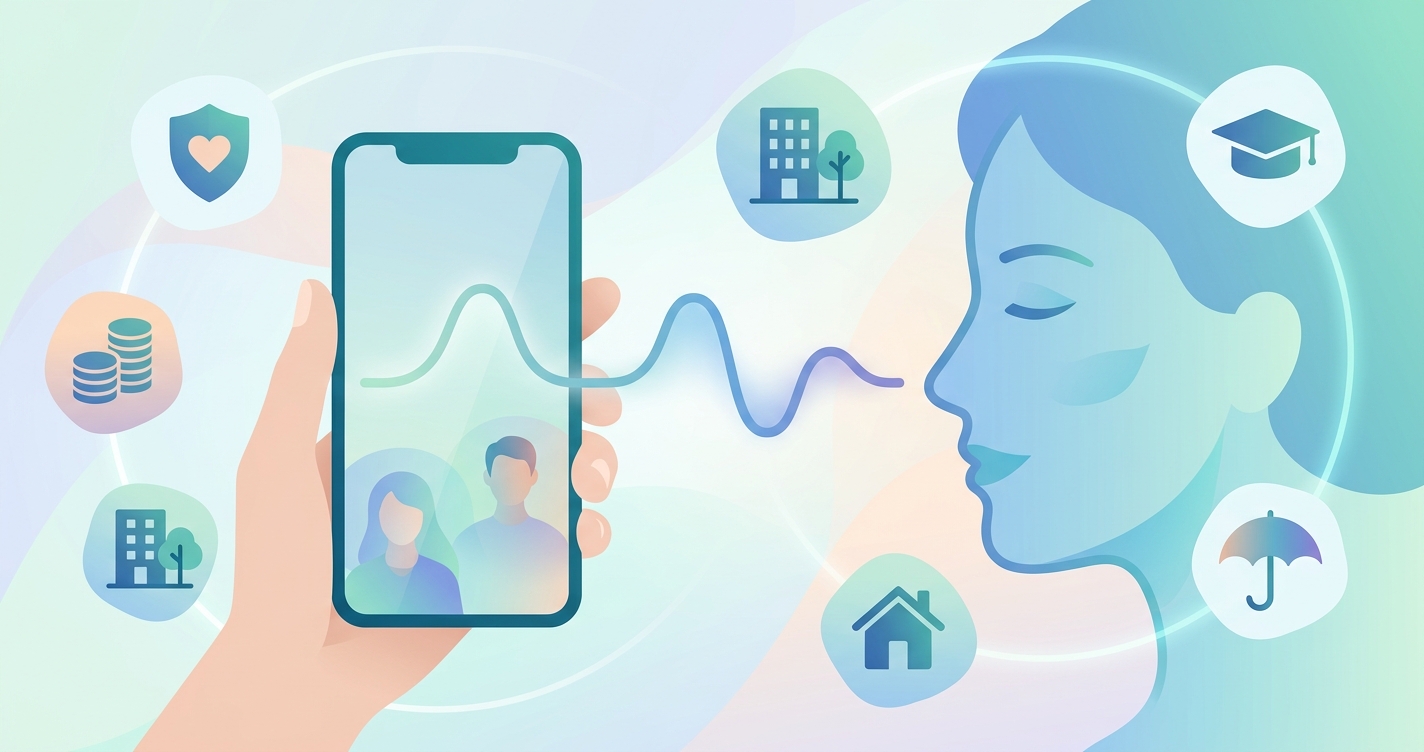
The short answer that benefits teams give an employee asking this question is yes, and the operational implication for carriers is larger than most enrollment managers expect. For a group population, the question of whether someone can complete a screening on the phone already in their pocket is not a feature question. It is a coverage-rate question. Every device that already works is one fewer kit to mail, one fewer clinic appointment to schedule, and one fewer reason for a member to skip the assessment entirely. Employer health screening technology phone capability has moved from a novelty pitch to a baseline expectation, and the carriers and third-party administrators (TPAs) building group programs around it are seeing the difference in participation.
A December 2025 survey reported by Fierce Healthcare found that 71% of U.S. adults have adopted health-related apps and 64% have adopted health-related devices, with biometrics being the top category tracked by 51% of respondents.
The relevance for group benefits is direct. The hardware required to run a modern contactless screening is already distributed across nearly the entire covered population, paid for by the members themselves, and refreshed on a roughly three-year cycle without any cost to the plan.
Why employer health screening technology on a phone changes the math
Traditional biometric screening assumes one of two delivery models: an on-site event staffed by phlebotomists, or a mailed test kit the member completes and returns. Both carry a fixed cost per participant and a drop-off rate at every step. Employer health screening technology that runs on a phone collapses those steps. A member opens a link, points the front-facing camera at their face for roughly a minute, and the camera captures subtle color changes in the skin that correspond to the cardiac pulse. This technique, remote photoplethysmography (rPPG), is the same signal a fingertip pulse oximeter reads, captured at a distance through the standard RGB camera in any recent smartphone.
The accuracy envelope has narrowed enough to matter for population-level screening. In a 2024 review of PPG-based vital sign measurement using smartphone cameras, Ghada Khairi Khessro and AbdulSattar Muhammed Khidhir reported that heart rate measurement studies generally show error rates under 5%, blood pressure estimation under 10%, and SpO2 within 3.5%. Separate work by M. Elgendi, Igor Martinelli, and Carlo Menon (2024) focused on signal quality indexing, the problem of knowing when a captured video is good enough to trust, which is the exact gating logic a group program needs to keep noisy data out of an underwriting feed.
The table below frames the three delivery models the way a benefits buyer evaluates them.
| Screening model | Hardware cost to plan | Setup per member | Typical access barrier | Scales to remote workforce |
|---|---|---|---|---|
| On-site clinic event | High (staff, space, supplies) | Scheduling and travel | Must be physically present on event day | Poor |
| Mailed test kit | Moderate (kit + return shipping) | Self-collection and mail-back | Kit loss, sample errors, return delay | Moderate |
| Phone-based contactless scan | Minimal (member owns device) | Open a link, scan ~60 seconds | Older device or poor lighting | Strong |
The pattern is consistent. The phone-based model moves the hardware cost off the plan ledger and removes the scheduling step that drives most enrollment-period attrition.
What a group program gains from this shift:
- A device base already present across the covered population, with no procurement cycle.
- Completion in a single session rather than a multi-day kit round trip.
- Reach into remote, hybrid, and multi-site workforces that on-site events cannot cover economically.
- Lower marginal cost per additional member, which improves the economics of small and mid-size groups.
- A digital data path that flows straight into ben-admin and underwriting systems without manual transcription.
Industry applications for carriers and TPAs
Open enrollment at population scale
Open enrollment is the densest data-collection window in the group calendar, and it is also the moment when friction does the most damage. A screening that runs on an existing phone lets a carrier attach a biometric step to the enrollment flow without adding a clinic line item. Members complete it from the same device they use to elect coverage, which keeps the assessment inside the moment of highest attention.
Voluntary and worksite benefits
Voluntary product lines live and die on take rate. When a worksite life or critical-illness product can be priced or accelerated using a one-minute phone scan instead of a fluid draw, the enrollment conversation gets shorter and the conversion improves. The device requirement effectively disappears, because the requirement is a phone the member already carries.
Distributed and remote workforces
A TPA administering a group spread across dozens of sites, or a fully remote employer, cannot run a cost-effective on-site event. Phone-based screening turns geography into a non-issue. The same link reaches a warehouse floor and a home office, and the data lands in one normalized feed.
Current research and evidence
The clinical literature behind contactless phone screening has matured along two tracks: signal capture and validation in real-world conditions. On capture, Seunghyun Kim, Kunyoung Lee, J. Hwang, Hakjin Lee, and Eui Chul Lee (2024) studied hybrid RGB and near-infrared camera approaches to improve rPPG reliability under variable lighting, one of the main confounders in uncontrolled home settings. On validation, a 2024 real-world study of smartphone-based photoplethysmography for atrial fibrillation reported 98.3% sensitivity and 99.9% specificity in distinguishing sinus rhythm from atrial fibrillation, evidence that consumer-grade cameras can support meaningful cardiac signal detection outside the lab.
The participation evidence is just as relevant to a benefits buyer. Mobile-enabled health programs have been associated with a 5% to 10% rise in participation when services are offered digitally, and well-structured incentive designs push completion far higher. The mHealth market reached $71.59 billion in 2024 on its way to a projected $268.46 billion by 2034, a signal that the device base and member familiarity a phone-based program depends on are both expanding, not plateauing.
Two caveats belong in any honest assessment. First, accuracy varies with device age, camera quality, and lighting, which is why signal-quality gating matters more than headline error rates. Second, phone-based metrics are screening signals, not diagnostic measurements, and group programs should position them as risk-stratification inputs rather than clinical results.
The future of employer health screening technology on phones
The direction of travel is toward more signals from the same one-minute capture. As the lightweight model architectures and transfer-learning methods that researchers are now refining make their way into production, the same facial scan that returns heart rate today is expected to return a wider panel of cardiovascular and metabolic indicators, with confidence scores attached to each. For carriers, the strategic value is a standing, repeatable measurement channel rather than a once-a-year event. A member who screens at enrollment can re-screen at renewal from the same device, which turns a static snapshot into a trend line that population-health and underwriting teams can actually use.
The constraint going forward is governance, not hardware. The device base is already in place. The work for carriers and TPAs is building the consent, data-flow, and signal-quality controls that let a phone-based feed sit comfortably inside an underwriting and wellness pipeline.
Frequently asked questions
Does an employee need a new or expensive phone to complete the screening?
No. The technique relies on the standard front-facing RGB camera found in most smartphones from the last several years. The main practical requirements are adequate lighting and holding the device steady for about a minute, which is why quality-gating logic is built in to reject captures that are too dark or too unstable to trust.
Is a phone-based scan as reliable as a blood draw for a group program?
It serves a different purpose. A 2024 review found smartphone PPG heart rate error rates under 5% and SpO2 within 3.5%, which is strong for screening and risk stratification. It is not a diagnostic substitute for laboratory testing. Group programs use it to widen participation and stratify risk, not to produce clinical lab values.
How does phone-based screening improve participation for carriers and TPAs?
It removes the two biggest sources of drop-off: scheduling an on-site appointment and completing or returning a mailed kit. Digital delivery has been linked to a 5% to 10% participation lift on its own, and pairing it with the device members already own removes the hardware barrier entirely.
What about members who do not own a smartphone?
A small share of any group will lack a compatible device, so a complete program keeps a fallback path such as a kiosk, on-site option, or alternate method. Phone-based screening is the default that lifts the majority of completion, not the only channel offered.
For group insurance carriers, TPAs, and benefits consultants evaluating how to widen screening reach without adding hardware cost, Circadify is building scalable contactless biometric screening designed to run on the devices members already carry. To explore how this fits a group enrollment or wellness program, review the enterprise pilot program at circadify.com/industries/payers-insurance.