How Health Screening Data Feeds Population Health Programs
How employers, carriers, and TPAs turn health screening data into population health programs, risk stratification, and measurable follow-up across covered lives.
Health screening data only becomes valuable when it changes what happens next. Employers and carriers have spent years collecting biometrics during open enrollment or annual wellness campaigns, but the real point is not the spreadsheet. It is whether that data helps a population health team identify rising risk, segment members intelligently, and move people into the right follow-up programs before claims costs spike. That is why health screening data population health programs are getting more attention from payers, TPAs, and benefits consultants right now.
"The workplace can be an effective setting for interventions designed to reduce health risks." — Soeren Mattke, RAND and Johns Hopkins Bloomberg School of Public Health, in RAND's workplace wellness research
How health screening data feeds population health programs
Population health programs live or die on segmentation. A care management team needs some practical way to sort a covered population into broad groups: low risk, rising risk, and higher risk members who need immediate outreach. Screening data gives that process a starting point.
The CDC's Workplace Health Model puts assessment first for a reason. Before an employer or payer can design an intervention, it has to understand the health risks already present in the population. In practice, that means combining screening results with claims, pharmacy, eligibility, and demographic data. A blood pressure reading by itself is just one number. Combined with prior utilization, medication history, and chronic condition prevalence, it becomes a signal that helps determine who may need coaching, care navigation, or preventive follow-up.
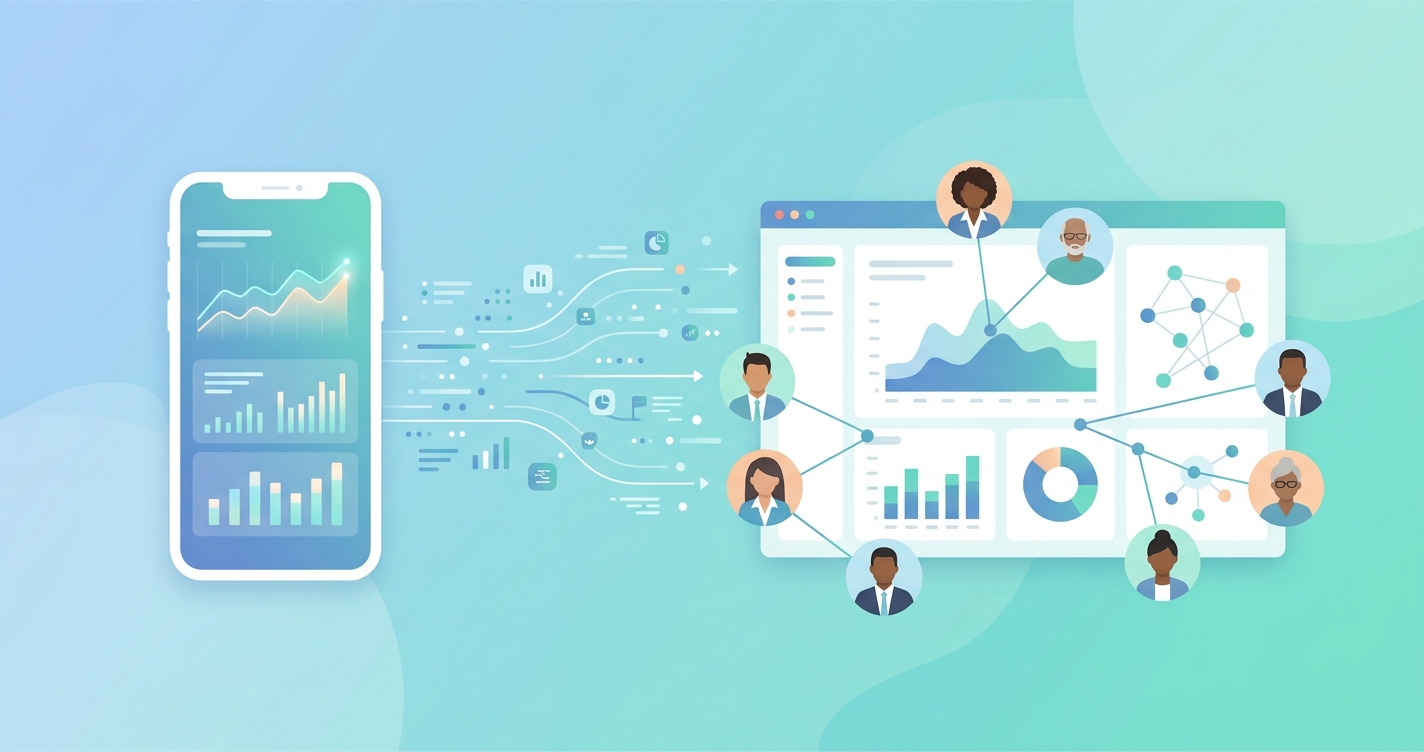
That is also why employers are moving away from one-off screening events that end in a PDF nobody revisits. The stronger model is continuous: collect standardized data, feed it into a central analytics layer, and use it to trigger targeted programs. For a group carrier, that might mean identifying members who should be routed into hypertension outreach. For a self-funded employer, it might mean deciding which sites or employee cohorts need more preventive support in the next quarter.
| Data input | What it shows | How population health teams use it | Typical next step |
|---|---|---|---|
| Blood pressure and pulse trends | Early cardiovascular risk patterns | Risk stratification and outreach prioritization | Coaching, PCP follow-up, hypertension campaigns |
| Respiratory rate and recovery metrics | Possible stress, illness, or fitness change | Trend monitoring across employee cohorts | Behavioral health or wellness check-ins |
| BMI and weight-related screening data | Obesity-related risk concentration | Chronic disease forecasting | Nutrition support, care management referral |
| Claims and pharmacy history | Existing diagnoses and medication adherence | Confirms risk severity | Case management or medication review |
| Demographic and site-level data | Where risk is concentrated | Program design by geography, workforce type, or benefit plan | Targeted communications and employer interventions |
A lot of the operational value comes from aggregation, not individual diagnostics. NCQA notes that more than 235 million people are enrolled in plans that report HEDIS results, which is one reason standardized measurement matters so much. Population health teams need data they can compare across groups, time periods, and reporting frameworks. If screening inputs are inconsistent, the downstream program design gets messy fast.
Why standardized data matters more than more data
Benefits teams often assume the answer is to collect more variables. Usually the real problem is that the data arrives in incompatible formats, from different vendors, at different times. That makes it hard to build a usable population view.
A cleaner system starts with repeatable measurements and consistent routing rules. If the same screening workflow reaches members in Dallas, Phoenix, and remote home offices, the carrier or TPA can compare cohorts without spending weeks reconciling files. That sounds boring, but this is where population health programs either become operational or stay theoretical.
What population health teams actually do with screening data
Once screening data is cleaned and linked to enrollment records, it usually feeds four decisions.
- Which members need immediate outreach versus low-touch nudges
- Which chronic condition programs need more staffing or budget
- Which employer groups or sites show concentrated risk patterns
- Which preventive gaps should be tracked in reporting cycles tied to HEDIS and other quality frameworks
This is where the term population health can get overused. In a practical employer or insurance setting, it usually means identifying patterns early enough to intervene before they become expensive claims. That may involve nurse outreach, digital coaching, care navigation, preventive reminders, or benefit design adjustments during the next renewal cycle.
Risk segmentation for group programs
The first use case is risk stratification. Screening data helps sort populations into cohorts that deserve different levels of attention. A member with no prior diagnosis but repeated elevated blood pressure readings may belong in a rising-risk segment. A member with abnormal screening results plus diabetes medication fills and missed preventive visits may need much faster outreach.
Program design for employers and TPAs
The second use case is program design. Aggregate screening data can show whether a workforce has a concentrated musculoskeletal issue, elevated cardiometabolic risk, or poor preventive engagement in one division versus another. That does not tell employers everything, but it gives benefits leaders a more credible basis for deciding what to fund next year.
Quality reporting and health equity work
The third use case is measurement. NCQA's recent HEDIS work has expanded the role of race and ethnicity stratification, with 22 measures now stratified to help health plans spot disparities in care. Screening data does not replace claims-based quality measurement, but it can strengthen the picture by showing where risk signals are building before a full diagnosis or hospitalization appears in claims.
Where the evidence gets complicated
There is a temptation to treat any screening program as automatically useful. The research is more mixed than that.
Mattke and colleagues published a 2019 randomized workplace wellness trial in JAMA involving 32,974 employees across 160 worksites. The program included biometric screening and health risk assessments, but it did not produce significant short-run changes in clinical outcomes or health spending over 18 months. That study matters because it pushed employers to ask a better question: not whether screening exists, but whether the data leads to a concrete follow-up model.
That distinction is important. Screening without workflow is mostly an event. Screening that feeds a population health engine is something else. The goal is not to prove that a biometric day by itself changes the world. The goal is to use risk signals to decide who gets outreach, which interventions are worth scaling, and where employer health strategy is failing to reach the people who need it.
A literature review on biometric screening data in employer-sponsored population health management programs reached a similar middle ground. The review found that screening data can support prevention and targeting, but the value depends on how well it is connected to broader program design, privacy governance, and follow-up services. That feels right. Raw data does not lower trend lines. Systems do.
Industry applications
For group insurance carriers
Carriers use screening data to understand the health profile of covered populations before renewal discussions and during ongoing risk management. The strongest use case is not individual adjudication. It is identifying broad risk clusters, likely cost drivers, and groups that should receive more preventive engagement.
For TPAs and care management partners
TPAs often sit closest to the operational problem. They need data feeds that can trigger outreach rules, assign members to programs, and give employer clients a usable dashboard. If screening data arrives late or in inconsistent formats, the TPA ends up doing manual cleanup instead of population management.
For employer benefits teams
Employers care about participation, practicality, and whether the program reaches distributed workers. If only headquarters employees complete the screening, the resulting population view is skewed. That is why access model matters. A more flexible screening channel usually produces a more representative dataset.
Current research and evidence
The CDC framework remains useful because it treats screening as one piece of a larger loop: assess, plan, implement, evaluate. That sounds obvious, but plenty of employer programs still stop after the first step.
RAND's work under Mattke helped puncture the idea that screening alone guarantees savings. The more valuable lesson was operational. Population health programs need data tied to interventions people will actually use.
NCQA's HEDIS program shows the scale of structured measurement in modern healthcare reporting, with more than 235 million people in reporting plans. That scale matters for employer and payer programs because it reinforces the need for standardized inputs and consistent quality workflows.
KFF's 2025 Employer Health Benefits Survey also shows why this remains relevant. Large employers still use biometric screening and incentives widely, which means the next issue is no longer whether data gets collected. It is whether the data ends up in a program that can change outreach, navigation, and preventive follow-up.
The future of health screening data in population health
The old model was annual collection, delayed reporting, and generic interventions sent to everyone. The newer model is faster, more segmented, and more digital. Screening data is increasingly expected to move through APIs, appear in dashboards quickly, and support targeted action instead of year-end summaries.
For employer and payer use cases, that shift favors tools that can capture standardized signals without heavy logistics. Companies like Circadify are building smartphone-based screening workflows for that environment, where the challenge is less about running a one-day event and more about generating usable data across a large distributed population.
If you want the broader operational context, our post on multi-site employer health screening logistics looks at data collection across dispersed workforces, and our analysis of self-funded employer health data for risk management covers what happens when screening information is folded into longer-term planning.
Frequently asked questions
What is the role of health screening data in population health programs?
It gives employers, carriers, and TPAs an early view of risk across a covered population. That data can support segmentation, outreach planning, preventive program design, and quality measurement when it is combined with claims and enrollment data.
Does health screening data by itself improve outcomes?
Not usually. Research shows the value depends on what happens after collection. Screening data is most useful when it routes members into coaching, care management, preventive follow-up, or other structured interventions.
Why do population health teams care about standardized screening data?
Because inconsistent inputs make it hard to compare groups, track trends, or automate outreach rules. Standardization matters if the goal is to manage a population rather than run a one-time event.
How does digital screening fit into population health programs?
Digital screening can widen access, reduce logistics, and produce faster data feeds, especially for distributed workforces. That makes it easier for carriers and TPAs to use screening information in ongoing population health workflows rather than annual campaigns.