Mobile Health Scan vs Onsite Clinic for Group Plans
A research comparison of mobile health scan vs onsite screening for group plans, weighing cost, reach, and participation for carriers, TPAs, and benefits consultants.
Every group plan that collects biometric data eventually confronts the same operational fork: park a nurse and a phlebotomy station in a conference room, or push a phone-based scan to the covered population and let them complete it from home. The choice looks like a logistics detail, but it quietly determines how many lives a program actually captures, what a screened life costs, and whether the resulting dataset is broad enough to inform underwriting. For carriers, TPA administrators, and benefits consultants building 2026 program specs, the question of mobile health scan vs onsite screening has moved from a procurement footnote to a strategic line item. The numbers behind each model now diverge sharply enough that defaulting to the familiar onsite clinic can cost a program both reach and budget.
In 2024, only 44 percent of large firms and 9 percent of small firms offered biometric screening at all, and among unincentivized programs the median participation rate sits near 20 percent, according to KFF's Employer Health Benefits Survey.
Mobile health scan vs onsite screening: the core trade-off
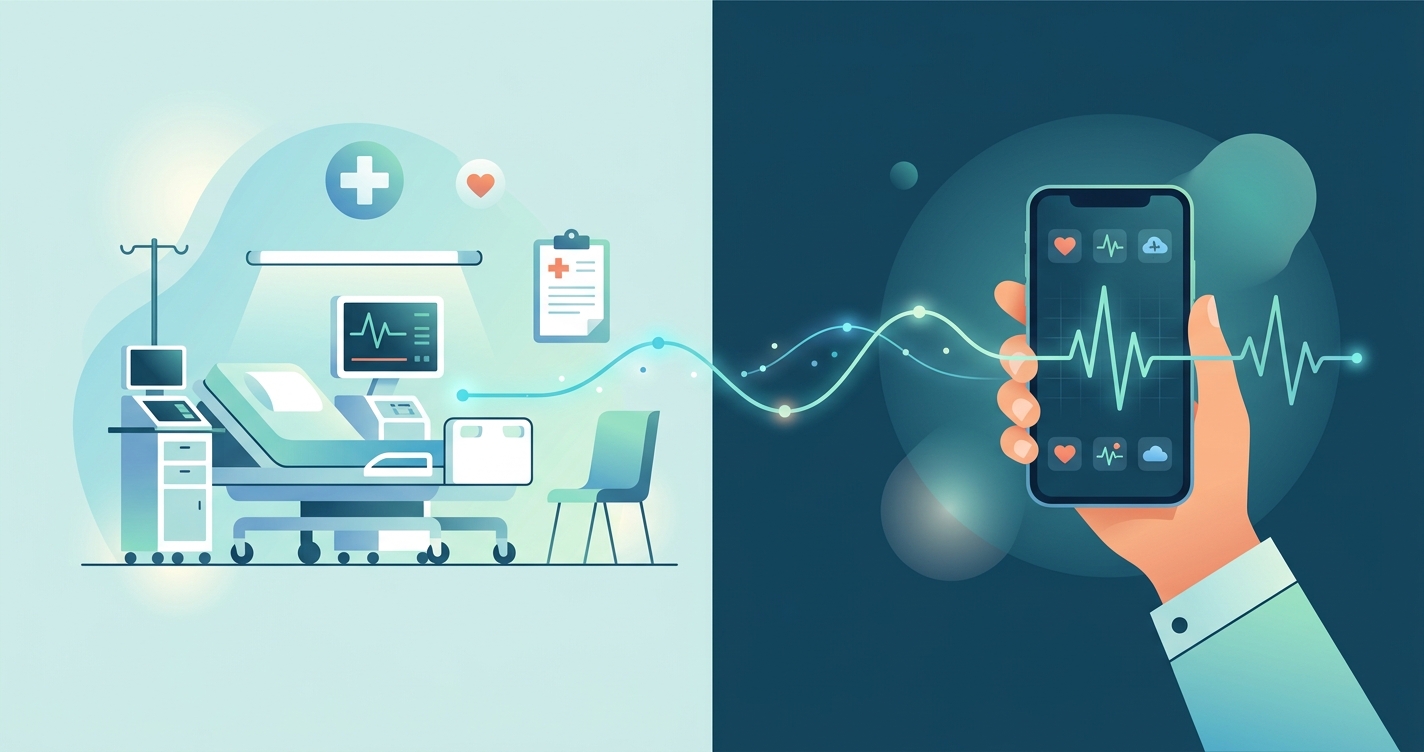
The comparison between a mobile health scan vs onsite screening comes down to three variables that group benefits leaders already track: cost per screened life, geographic and demographic reach, and participation. An onsite biometric clinic concentrates clinical accuracy and a captive moment into a single day and place. A mobile screening event, delivered as a remote health scan to a group plan population, trades the venous blood draw for scale, schedule flexibility, and a far lower marginal cost per added participant.
The onsite model carries fixed costs that do not shrink as a population grows more dispersed. Industry pricing for onsite biometric clinics generally runs $36 to $80 per participant, with common packages near $40 to $45, and add-on lab markers such as HbA1c adding roughly $33 per person. Those figures assume a room, staff, and a minimum headcount per event. A workforce spread across ten small sites multiplies the fixed cost rather than diluting it, which is exactly the population profile where remote screening economics pull ahead.
A phone-based scan inverts that structure. The infrastructure is the device the member already owns, so the marginal cost of screening one more life trends toward software, not staffing. That distinction is what makes remote scanning attractive for dispersed, remote, and multi-site books where an onsite biometric clinic struggles to reach a quorum.
| Factor | Onsite Biometric Clinic | Mobile / Remote Health Scan |
|---|---|---|
| Typical cost per participant | $36 to $80, plus add-on markers | Lower marginal cost; software-driven |
| Reach for dispersed workforces | Limited by site count and minimums | High; not tied to physical location |
| Scheduling | Fixed event day and window | On-demand, self-paced |
| Data captured | Venous blood markers, full lipid panel, A1c | Cardiovascular and vitals via camera-based scan |
| Best-fit population | Single large worksite, high density | Remote, multi-site, hard-to-reach groups |
| Participation driver | In-person convenience on event day | Access from home; removes travel friction |
| Logistics burden on HR | Room booking, staffing, scheduling | Link distribution and reminders |
The honest read is that these methods are not strictly substitutes. They occupy different points on a curve of accuracy versus reach, and the right answer for a given group plan depends on which constraint binds hardest.
Where each model wins
Benefits teams evaluating a screening method comparison should map the decision to population shape rather than to a blanket preference.
- An onsite biometric clinic remains strong when a single worksite holds several hundred employees, when the program needs venous lab values that a camera scan cannot produce, and when employer culture supports a dedicated event day.
- A mobile screening event wins when the covered population is distributed across many small locations, includes remote or hybrid workers, or spans dependents who never set foot in a workplace.
- A remote health scan for a group plan reduces the travel and time-off friction that suppresses participation, which matters most for hourly and shift-based populations.
- Hybrid designs increasingly pair an onsite clinic for the headquarters population with a remote scan for everyone else, capturing density and dispersion in one program.
The participation gap is the variable most often underestimated. Because median unincentivized participation hovers near 20 percent, any method that lowers the barrier to completing a scan has an outsized effect on how representative the resulting dataset is. A program that screens a fifth of a population, skewed toward the healthy and the office-based, produces a biased sample that undermines the underwriting value the data was supposed to deliver.
Industry Applications
Group underwriting and risk insight
For group life and health carriers, the value of any screening is the population signal it feeds back into pricing. A remote health scan for a group plan widens the share of lives that contribute data, which matters more for underwriting confidence than the depth of any single record. A broad, lightly sampled population often informs group rating better than a deep but narrow onsite dataset that captures only the most engaged employees.
Voluntary benefits and enrollment
Voluntary product lines depend on capturing attention during the enrollment window. A phone-based scan attaches to the digital enrollment flow members are already completing, removing the calendar coordination an onsite biometric clinic demands. That continuity is why many enrollment-linked assessments now lean toward remote delivery.
TPA and Multi-Employer Programs
Third-party administrators managing many client groups face the multiplication problem directly. Scheduling onsite events across dozens of employers is a staffing and logistics drag. A standardized mobile screening event lets a TPA deploy one consistent method across a varied book, with reporting that rolls up cleanly rather than arriving in vendor-specific formats from scattered clinic days.
Current research and evidence
The technical case for remote scanning rests on the maturation of camera-based measurement. Remote photoplethysmography, or rPPG, extracts cardiovascular signals from facial video captured by a standard smartphone camera. A 2023 validation study of an rPPG-enabled application reported systolic blood pressure accuracy near 94 percent and diastolic near 93 percent in normotensive adults, with relative mean absolute percentage errors of roughly 6 to 7 percent. Separately, the ReViSe framework published on arXiv reported a mean absolute error of 6.7 mmHg for systolic and 9.6 mmHg for diastolic pressure from smartphone facial video. Research groups including a team at Singapore General Hospital have extended rPPG work toward blood pressure and hemoglobin estimation in clinical assessment settings.
The literature is candid about limits. Camera-based methods perform strongly for heart rate and oxygen saturation and acceptably for blood pressure in normotensive ranges, while accuracy narrows at the extremes and a camera cannot return a venous lipid panel or A1c value. On the operational side, KFF's 2024 survey confirms why reach matters so much: 65 percent of large firms offering biometric screening lean on incentives or penalties specifically because participation is hard to earn, and a meaningful share of employers have scaled back screening over efficacy concerns. The screening method comparison, then, is partly a question of which model recovers the participation that the field has long struggled to hold.
Industry data reinforces the scale point. TotalWellness reported collecting biometric data from more than 127,000 individuals in 2023, illustrating that population-level screening volume is achievable when the delivery model fits the workforce. The constraint is rarely the technology; it is whether the method reaches the lives that an onsite event leaves uncounted.
The future of group screening method comparison
The trajectory points toward blended programs in which the screening method comparison is run per population segment rather than per employer. Expect carriers and TPAs to default to remote scans for dispersed and dependent populations, reserve onsite clinics for high-density worksites that need venous labs, and route the combined output into a single underwriting and wellness dataset. As rPPG validation literature deepens and regulatory frameworks for software-based measurement clarify, the share of lives captured remotely will keep climbing, and the fixed-cost economics of the onsite biometric clinic will confine it to the cases where its accuracy advantage is genuinely required. The programs that win on cost and reach will be the ones that stop treating the choice as binary.
Frequently asked questions
Is a mobile health scan cheaper than an onsite clinic for group plans? For dispersed and multi-site populations, usually yes. Onsite biometric clinics carry fixed staffing and venue costs that run $36 to $80 per participant and do not shrink across many small locations. A remote scan's marginal cost per added life is largely software-driven, so it scales better across distributed groups.
Does a phone-based scan capture the same data as a venous blood draw? No. An onsite clinic can return a full lipid panel, glucose, and HbA1c from venous samples. A camera-based remote scan measures cardiovascular and vital-sign markers such as heart rate, blood pressure, and oxygen saturation. The two capture different data, which is why hybrid designs are common.
Which model produces better participation for group screening? Remote scans typically reduce the travel and time-off friction that suppresses turnout, which matters given that median unincentivized participation sits near 20 percent. Onsite clinics can perform well at a single dense worksite but struggle to reach remote workers and dependents.
How accurate is camera-based remote screening? Validation studies in 2023 reported smartphone rPPG blood pressure accuracy around 92 to 94 percent in normotensive adults, with strong performance for heart rate and oxygen saturation. Accuracy narrows at clinical extremes, and a camera cannot replace lab markers that require a blood sample.
Circadify is building scalable biometric screening designed for exactly this trade-off, helping carriers, TPAs, and benefits consultants extend reach across dispersed group populations without the fixed cost of an event for every site. Benefits consultants weighing a screening method comparison for 2026 can explore a remote screening pilot through Circadify's enterprise pilot program for payers and insurers.