Phone Health Scan vs Wearable Data for Group Plans
A comparison of phone-based health scans and wearable data feeds for capturing reliable group health metrics during benefits enrollment.
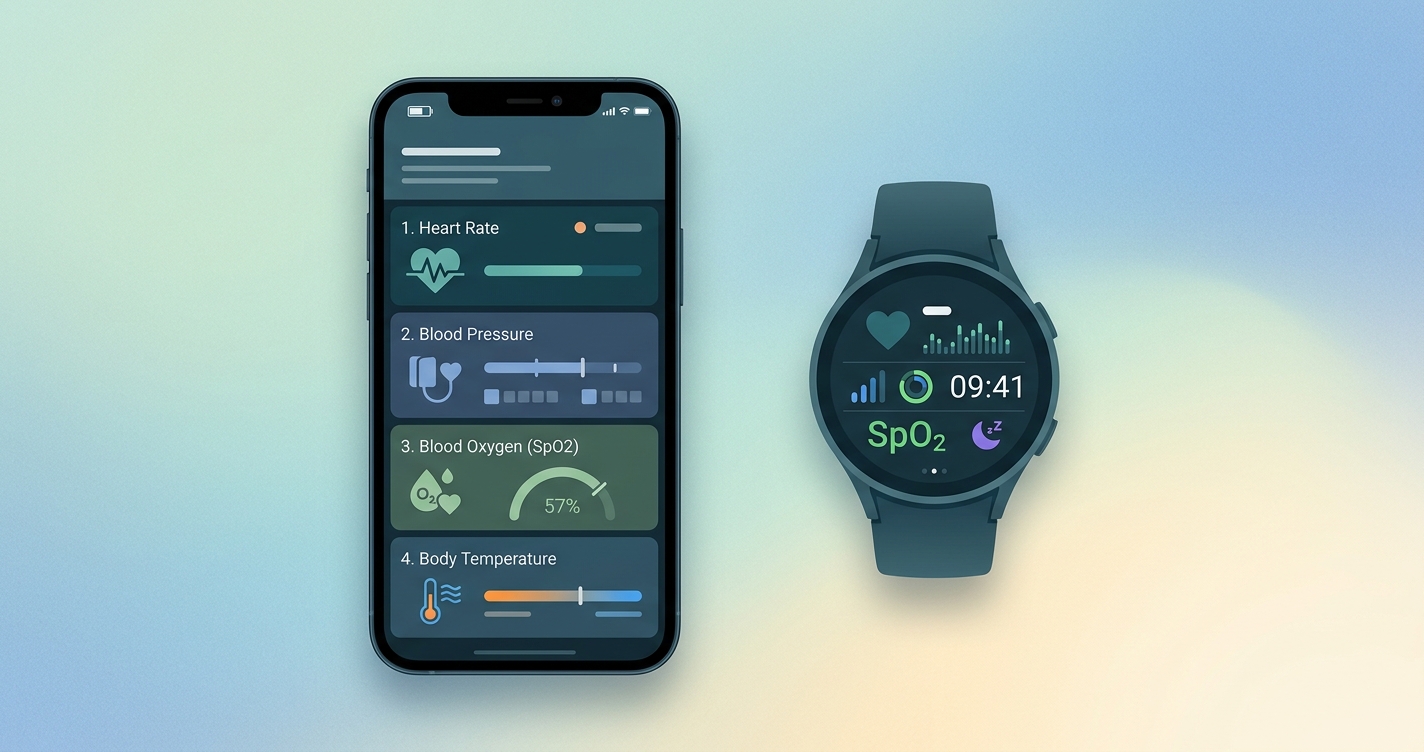
For group insurance carriers, third-party administrators, and benefits consultants, the annual open enrollment period represents the most critical window for capturing population health data. The logistical friction of traditional on-site blood draws has forced the industry to evaluate new models of data collection. As carriers move toward digital-first enrollment workflows, the conversation around employer biometric screening technology has increasingly focused on two distinct methodologies: data feeds from employee-owned wearable devices, and frictionless, software-based phone health scans utilizing remote photoplethysmography (rPPG). While both approaches aim to digitize risk assessment and wellness tracking, they offer fundamentally different operational realities for group plans.
"While approximately 63% of the US population utilizes fitness trackers or smartwatches, integrating this continuous telemetry into employer wellness programs consistently faces structural barriers regarding employee privacy concerns and data standardization across fragmented hardware ecosystems."
- 2024 Industry Analysis on Wearable Technology in the Workplace
Evaluating employer biometric screening technology
The transition from paper-based health risk assessments to automated digital data collection requires evaluating how employees interact with the chosen technology. Group plans must balance data density with participation rates. A highly continuous data stream from a wearable device offers granular insight but typically suffers from low program adoption due to hardware costs and privacy apprehensions. Conversely, a point-in-time assessment using a standard smartphone camera offers high accessibility but provides a cross-sectional view of the covered population.
When implementing employer biometric screening technology, carriers must define the primary objective: is the goal to track ongoing lifestyle metrics to reduce chronic disease claims, or to capture an accurate, immediate baseline risk profile of the entire risk pool during the two-week open enrollment window?
The wearable data approach
Wearable data integration relies on the employee consenting to share the metrics collected by their personal smartwatch or fitness band. This data often includes continuous heart rate, sleep duration, daily steps, and sometimes heart rate variability. For group life underwriting or medical stop-loss profiling, longitudinal data is theoretically highly valuable.
However, relying on wearables presents immediate logistical constraints. The carrier must build integration pipelines with multiple device manufacturers to normalize the incoming streams into a usable format. Furthermore, not all employees own a modern wearable device. This creates a self-selection bias in the risk pool where only the most active and health-conscious individuals opt into the data sharing program, leaving the carrier blind to the higher-risk segments of the population.
The phone health scan approach
Phone-based health scans operate on the principles of remote photoplethysmography (rPPG). This technology uses the standard optical lens of a smartphone camera to detect microscopic changes in the absorption of light across the subject's facial tissue, correlating these changes with blood volume pulses.
Because rPPG is entirely software-based, it removes the hardware dependency from the screening equation. An employee simply looks at their smartphone or laptop camera for a short duration while completing their digital enrollment forms. This approach dramatically lowers the barrier to entry, resulting in much higher completion rates across the employee population, regardless of socioeconomic status or personal device preferences.
| Feature | Phone Health Scans (rPPG) | Wearable Data Integration |
|---|---|---|
| Hardware Requirement | Any standard smartphone or laptop camera | Specific, modern smartwatch or fitness tracker |
| Deployment Speed | Instant software integration at enrollment | Requires multi-device API integrations and data normalization |
| Data Continuity | Point-in-time baseline snapshot | Continuous, longitudinal tracking |
| Opt-In Friction | Low (completed alongside standard forms) | High (requires ongoing data sharing consent and device wear) |
| Primary Group Use Case | Broad population baseline screening, accelerated underwriting | Targeted chronic disease management, active wellness programs |
| Equity and Access | Near-universal (does not require external purchases) | Biased toward populations capable of affording smart devices |
The operational differences between the two modalities require benefits teams to weigh specific advantages and limitations for their client groups:
- Advantages of Phone Scans
- Removes the need for physical device distribution or reimbursement stipends.
- Generates immediate results that can be mapped to real-time enrollment decisions.
- Achieves higher statistical representation of the total group risk pool.
- Operates completely friction-free without requiring employees to remember to charge or wear a device.
- Limitations of Phone Scans
- Only provides a snapshot of vital signs at the moment of the scan.
- Cannot track continuous behavioral metrics like daily activity or sleep hygiene.
- Advantages of Wearables
- Provides a dense, longitudinal dataset covering weeks or months of biometric history.
- Excels at behavioral modification by keeping health metrics visible for the user.
- Can track long-term trends and sudden deviations in baseline health metrics.
- Limitations of Wearables
- Fragmented data ecosystems require complex backend aggregation for carriers.
- Introduces significant privacy concerns, as employees are often hesitant to stream continuous location and health data to an employer-sponsored platform.
Industry applications for group data collection
Scaling accelerated underwriting
For group life and supplemental health products, traditional underwriting requires significant manual intervention. Wearable data can theoretically support accelerated underwriting, but the latency involved in collecting enough historical data often delays policy issuance. Phone scans provide an immediate, structured data package such as heart rate, breathing rate, and derived cardiovascular indicators that can be instantly ingested by an automated underwriting rules engine during the enrollment session.
Stop-loss risk profiling
Self-funded employers rely on stop-loss insurance to protect against catastrophic claims. Stop-loss carriers require an accurate assessment of the group's underlying health risk. If a screening program relies solely on wearable opt-ins, the resulting data often misrepresents the risk pool by excluding non-participants. A highly accessible phone scan during the onboarding process ensures the stop-loss carrier receives a complete, statistically valid overview of the population's baseline health.
Corporate wellness plan design
Wellness programs require measurable baselines to prove a return on investment. Wearables are highly effective for execution, such as running step challenges and tracking active minutes. However, phone scans are often better suited for the initial health risk assessment phase, quickly segmenting the population to identify anonymous, aggregate risk factors like elevated cardiovascular strain across specific departments or age brackets.
Current research and evidence
The academic and clinical evaluation of remote health monitoring technologies has expanded rapidly, providing a strong empirical foundation for group health data strategies.
In 2023, Ming-Zer Poh and a team of researchers at Google Research published findings on passive heart rate monitoring via smartphone cameras. Their work demonstrated that advanced signal processing could extract reliable cardiovascular data from front-facing lenses during standard device interaction. This research supports the viability of deploying rPPG as a background health assessment tool without requiring specialized clinical hardware.
Further validating the utility of these optical measurements, an exploratory study by Theodore Curran, Daniel McDuff, and Shwetak Patel at the University of Washington in 2024 investigated the estimation of blood pressure using rPPG signals among ambulatory patients with cardiovascular disease. Their findings highlight the potential for camera-based assessments to capture complex hemodynamic metrics outside of traditional clinical environments.
Additionally, a comprehensive 2024 review published by Gang Chen, Linglin Zou, and Zhong Ji at Tianjin University on advances in photoplethysmography-based monitoring outlined the algorithmic improvements necessary to process these optical signals accurately across diverse populations. Their work emphasizes the critical role of deep learning in mitigating ambient lighting and motion artifacts, moving rPPG from a controlled laboratory concept to a scalable tool for population health screening.
The future of group plan data sourcing
The next phase of employer health data strategy will likely abandon the binary choice between point-in-time assessments and continuous tracking. Instead, leading carriers are beginning to architect hybrid data frameworks.
In these emerging models, a frictionless phone health scan will act as the universal gateway during open enrollment. Because it requires zero hardware deployment and minimal time, it ensures near-complete participation, providing the carrier with an accurate, aggregate baseline of the entire group. Based on the insights generated from that baseline assessment, the plan can then deploy wearable devices strategically, distributing them only to specific cohorts identified as high-risk or those who actively opt into intensive, continuous wellness programs.
By using smartphone optical sensors to capture the broad view and wearables to manage the targeted interventions, group plans can optimize their technology spend, respect employee privacy preferences, and maintain a highly accurate understanding of their ongoing clinical risk.
Frequently asked questions
Are smartphone health scans replacing wearable devices in group plans?
Smartphone scans are not entirely replacing wearable devices; rather, they serve different functions. Phone scans provide a highly accessible, low-friction method for capturing a baseline health snapshot of an entire employee population during enrollment. Wearables remain valuable for continuous, localized tracking and behavioral interventions for individuals managing specific health goals.
How do carriers integrate wearable data into existing underwriting models?
Integrating wearable data requires carriers to utilize application programming interfaces to pull data from diverse device manufacturers into a centralized data warehouse. This telemetry must then be normalized and mapped against actuarial models, a process that can be complex due to varying data standards and the intermittent nature of user-generated data.
Does employer biometric screening technology require employees to download an app?
It depends on the specific vendor and integration method. Many modern remote screening solutions can operate via a secure web browser link sent directly to an employee's phone or integrated directly into the digital enrollment portal via a software development kit, removing the need for an independent app download and reducing participant friction.
Why do wearable programs often experience low participation rates in employer settings?
Participation often lags due to hardware costs, the administrative burden of device distribution, and employee concerns regarding data privacy. Employees are frequently hesitant to share continuous health and activity data with a platform sponsored by their employer or an insurance carrier.
As the industry moves away from cumbersome hardware deployments and manual data collection, Circadify is actively addressing this space by providing scalable, software-based infrastructure for group carriers and benefits administrators. For organizations evaluating new data sources to power their underwriting and wellness initiatives, learn more about our enterprise solutions for payers and insurance at circadify.com/industries/payers-insurance.