
Remote Biometric Screening for Distributed Workforces: How It Works
How group insurance carriers and employers are deploying remote biometric screening for distributed workforces, replacing on-site events with smartphone-based health assessments.
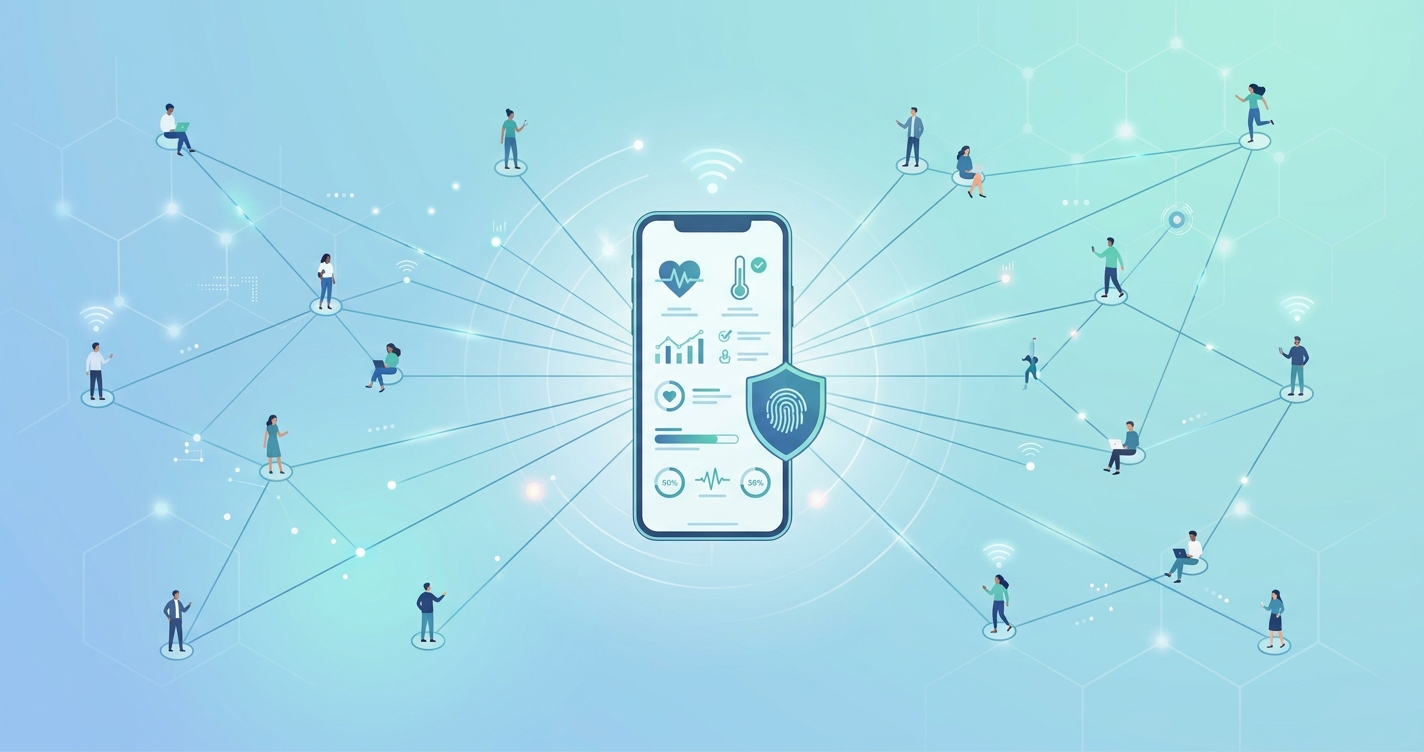
The old model of biometric screening for group insurance enrollment assumed everyone worked in the same building. A nurse showed up, set up a folding table in the break room, and employees lined up during their lunch break. That model broke somewhere around 2020 and never really recovered. With roughly 29% of the U.S. workforce now operating in hybrid arrangements according to Gallup's 2024 workplace data, and millions more working fully remote, the logistics of on-site biometric screening events have become untenable for employers with distributed teams. Remote biometric screening for distributed workforces is no longer a nice-to-have — it is the only way to get meaningful participation from employees who may never set foot in a central office.
"Among organizations offering health benefits, 22% of firms offered workers opportunities to complete biometric screening, with large firms at 43%." — 2025 KFF Employer Health Benefits Survey
Why On-Site Screening Fails Distributed Teams
The disconnect is straightforward. Traditional biometric events depend on physical co-location. When your workforce spans four time zones and twelve states, coordinating a single screening event is not just expensive — it effectively excludes anyone who cannot be on-site during the scheduled window. The result is predictable: participation drops, the data becomes less representative, and the screening program's value to both the employer and the carrier erodes.
The RAND Workplace Wellness Programs Study found that fewer than half of employees undergo clinical screening even when it is offered on-site. For remote workers who would need to travel to a designated location, that number drops further. As benefits consultants differentiate with health technology, some employers have tried workarounds — mailing home test kits, contracting with retail clinic networks, scheduling regional screening events — but each approach introduces its own friction and cost overhead.
The economics tell the story. On-site biometric events typically cost $50 to $100 per employee when factoring in vendor fees, scheduling coordination, and lost productivity during the screening window. For a 5,000-person distributed company, running regional events across multiple locations can push total program costs above $500,000 annually, with participation rates that rarely justify the spend.
How Remote Biometric Screening Actually Works
Remote biometric screening shifts the collection point from a physical location to the employee's own device. The general workflow follows a consistent pattern across most implementations:
- Enrollment trigger — The employer or carrier sends a digital screening invitation during the benefits enrollment window or wellness program cycle
- Employee self-service — The employee opens the screening application on their smartphone or tablet at a time that works for them
- Data capture — Camera-based technologies like rPPG (remote photoplethysmography) capture physiological signals including heart rate, heart rate variability, and respiratory rate through the device camera
- Supplemental input — The employee may answer a health risk assessment questionnaire or input additional measurements
- Secure transmission — Captured data transmits via encrypted channels to the carrier, TPA, or wellness platform
- Integration — Results feed into enrollment systems, underwriting workflows, or population health dashboards
The whole process takes minutes instead of requiring a scheduled appointment and physical travel.
Comparison of Screening Approaches for Distributed Workforces
| Factor | On-Site Event | Retail Clinic Network | Home Test Kit | Remote Digital Screening |
|---|---|---|---|---|
| Geographic Reach | Single location | Depends on clinic density | Nationwide | Anywhere with a smartphone |
| Employee Time Required | 30-60 min + travel | 30-45 min + travel | 15-20 min + mail delay | 5-10 minutes |
| Data Latency | 1-3 weeks batch processing | 3-7 days per result | 1-3 weeks including shipping | Near real-time |
| Cost Per Screen | $50-100 | $75-150 | $30-60 + shipping | Lower per-unit, no logistics |
| Scheduling Flexibility | Fixed window | Clinic hours only | Anytime, but kit must arrive | Anytime, instant access |
| Participation Barrier | Must be on-site | Must visit clinic | Must handle blood sample | Low — phone-based |
| Scalability | Limited by venue capacity | Limited by clinic contracts | Mail logistics bottleneck | Platform scales horizontally |
| Data Standardization | Varies by vendor staff | Varies by clinic | Lab-dependent | Consistent digital capture |
Applications Across Group Insurance Segments
Group Life and Disability Carriers
For group life carriers, remote biometric screening solves a specific underwriting problem: getting any health data at all on group members. Most group life policies below certain thresholds rely entirely on simplified issue or guaranteed issue without individual health assessment. Remote screening gives carriers a lightweight mechanism to gather population-level biometric data that can inform group pricing, even when individual underwriting is not warranted. The data does not replace traditional underwriting for high-face-amount cases, but it fills a gap that has existed since group products moved to simplified enrollment decades ago.
Third-Party Administrators
TPAs managing benefits for multiple employer clients face the challenge of standardizing screening across diverse organizations, each with different workforce distributions. A remote screening platform allows a TPA to offer a single, consistent screening experience regardless of whether a client's employees are clustered in one headquarters or spread across fifty home offices. This simplifies administration and produces more comparable data across the TPA's book of business.
Self-Funded Employers
Self-funded employers have the most direct financial incentive to screen their populations. Every chronic condition identified early and managed proactively reduces the employer's direct claims exposure. For self-funded employers with distributed workforces, remote screening removes the primary barrier to getting health data on their hardest-to-reach employees. According to industry data from the 2024 open enrollment cycle, nearly 96% of users enrolled in benefits through digital channels, with mobile app usage increasing 69% year over year. Remote biometric screening fits naturally into this increasingly digital enrollment flow.
Research on Remote Health Assessment Participation
The evidence around digital screening participation is encouraging, though not uniformly positive. The 2025 KFF Employer Health Benefits Survey reports that 53% of large firms offering health risk assessments use incentives or penalties to encourage completion. Among those that do, participation rates improve meaningfully — the RAND study documented that incentivized programs achieve 63% HRA completion versus 29% without incentives.
What the research also shows is that accessibility matters as much as incentives. A meta-review of digital wellness programs published in PMC, covering studies from 2000 to 2023, found that digital delivery modalities consistently improve initial engagement compared to in-person-only options. This aligns with what employers report anecdotally: when you remove the requirement to physically show up somewhere, more people participate.
The Owl Labs State of Hybrid Work 2025 report found that hybrid employees report higher engagement (35%) than fully in-office workers (27%). Remote biometric screening can capitalize on this engagement by meeting hybrid and remote employees where they already are — on their devices, on their schedule.
A study indexed in PubMed analyzing biometric screening within a premium incentive-based wellness program found that participants accounted for 36.9% of medical claim costs for cardiac, cholesterol, diabetes, pulmonary, and renal conditions and were less likely to require hospital and emergency room care than non-participants. The screening itself may not cause better outcomes, but the employees who engage with screening programs tend to be more health-aware, and identifying at-risk individuals earlier gives employers and carriers more intervention options.
What Is Changing in 2026 and Beyond
Three developments are reshaping how remote biometric screening fits into the group insurance and employer benefits stack.
Camera-based vitals are maturing. rPPG technology — which extracts physiological signals from standard smartphone cameras by analyzing subtle skin color changes caused by blood flow — has advanced to the point where it can capture heart rate, respiratory rate, heart rate variability, and stress indicators without any additional hardware. This eliminates the last major friction point in remote screening: requiring employees to own or use a separate device.
Continuous data is replacing annual snapshots. The traditional model of one biometric screening per year is giving way to more frequent, lighter-touch check-ins. Remote screening technology makes it practical to capture health data quarterly or even monthly without the logistical overhead that would make that impossible with on-site events. For carriers, more frequent data means better trend visibility and earlier risk identification.
Benefits platforms are embedding screening natively. Rather than treating biometric screening as a standalone event managed by a separate vendor, benefits platforms are building screening capabilities directly into their enrollment and engagement workflows. When an employee opens their benefits app to review coverage options, they can complete a biometric screen in the same session. This reduces the gap between screening and enrollment that has historically depressed participation.
FAQ
How does remote biometric screening maintain data quality compared to in-person collection?
Remote screening platforms use several approaches to ensure data quality: guided workflows that walk employees through proper positioning and lighting conditions, algorithmic quality checks that reject poor captures in real-time, and standardized digital collection that eliminates the transcription errors common in paper-based on-site events. Camera-based rPPG systems analyze blood flow signals that are difficult to spoof, providing an additional layer of data integrity. The data format is also more consistent since every capture goes through the same digital pipeline rather than varying by which nurse or technician conducted the on-site screening.
What incentive structures work best for driving remote screening participation in distributed teams?
Research from the 2025 KFF survey shows that 53% of large firms use incentives or penalties for health risk assessments. The most effective approaches combine a meaningful financial incentive (premium differential or HSA contribution) with a frictionless digital experience. For distributed teams specifically, removing geographic barriers through remote screening is itself a form of incentive — you are making it easier, not just more rewarding. Employers that pair remote screening with premium discounts of $300-600 annually report participation rates in the 55-65% range across distributed populations.
Can remote biometric screening satisfy carrier requirements for group underwriting?
It depends on the carrier and the coverage tier. For most group life and disability products with simplified or guaranteed issue thresholds, remote biometric data can supplement or replace the limited health information carriers currently collect. For high-face-amount cases that require individual underwriting, remote screening can serve as a first-pass triage tool that identifies which applicants need further evaluation. Carriers are gradually updating their underwriting guidelines to accept digital biometric data, though the pace varies by carrier and product line.
What compliance considerations apply to remote biometric screening for multi-state employers?
Multi-state employers must navigate a patchwork of biometric data laws. Illinois BIPA, Texas CUBI, and Washington's biometric identifier law each impose different consent, notice, and retention requirements. HIPAA applies when screening data flows to a covered entity or business associate. Remote screening platforms serving distributed workforces need jurisdiction-aware consent workflows that present the correct legal disclosures based on each employee's location. Employers should also verify that their vendor's data storage and processing practices comply with the most restrictive applicable state law.
Group carriers, TPAs, and employers exploring remote biometric screening for their distributed workforces can learn more about smartphone-based health assessment technology at Circadify's solutions for payers and insurance organizations.