
Why do I need to do a quick health check to get my voluntary coverage this year?
A research view on the voluntary benefits health scan why question, explaining how a quick health check secures better coverage and faster approval at enrollment.
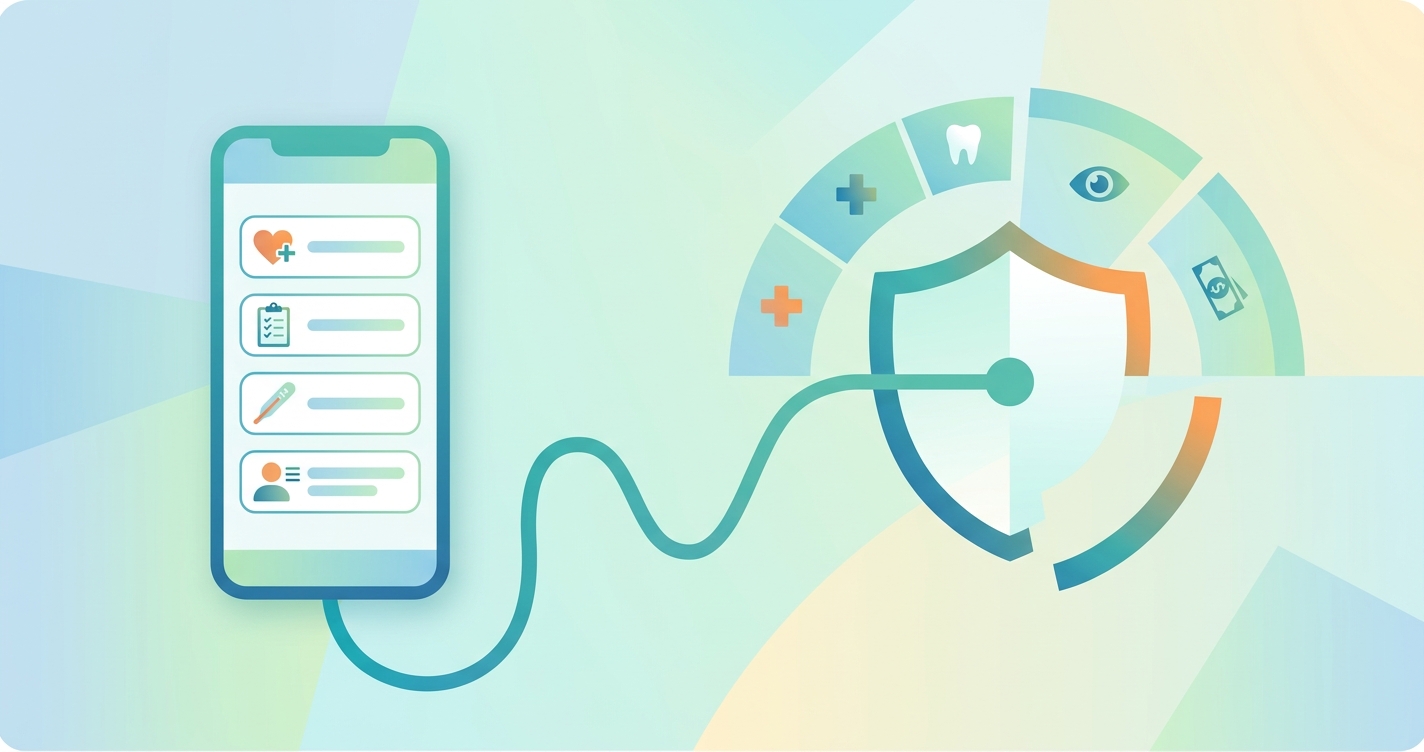
When an employee opens this year's enrollment portal and finds a short health questionnaire or biometric step standing between them and a higher voluntary life election, the reaction is usually friction first and questions second. For benefits consultants, that single moment is where retention, participation, and underwriting quality all collide. The voluntary benefits health scan why question is not really about inconvenience. It is about how carriers decide who qualifies for coverage above a guaranteed threshold, how quickly that decision happens, and how much an employee will pay. Understanding the mechanics lets consultants reframe a perceived obstacle as the lever that unlocks larger, better-priced coverage.
In the 2025 Insurance Barometer Study, LIMRA found that 55% of U.S. workers carry life insurance through their workplace, yet less than half of workers closely review what their benefits actually cover.
That gap between participation and understanding is exactly where the health check enters the picture. Most voluntary supplemental life, disability, and critical illness products are sold under two parallel tracks: a guaranteed issue (GI) amount that requires no medical information, and an elective amount above that threshold that does. The quick health check is the carrier's tool for assessing the elective layer without sending an employee to a paramedical exam or a lab draw.
The voluntary benefits health scan why question, answered
The short answer is that the health check substitutes for traditional evidence of insurability (EOI). When an employee elects voluntary coverage that exceeds the plan's guaranteed issue limit, or wants to increase coverage they declined in a prior year, the carrier needs a way to evaluate that additional risk. Historically that meant a lengthy paper EOI form, follow-up attending physician statements, and sometimes a full paramedical exam. According to Beam Benefits guidance published in 2025, EOI is typically triggered any time an election rises above the GI amount or when coverage is added outside an initial eligibility window.
A digital health scan compresses that process. Instead of a multi-week underwriting cycle, the employee answers a short set of health questions or completes a brief biometric capture during enrollment, and the carrier receives structured data it can score immediately. The benefit flows in three directions: the employee gets a faster decision and often a better rate, the employer sees higher take-up of elective coverage, and the carrier gets cleaner risk signal on the portion of the book that actually carries adverse selection risk.
The reason this matters in 2026 is participation economics. LIMRA reported that workplace life insurance new premium reached $691 million in the third quarter of 2025, a 9% increase year over year, even as the full year tracked slightly below 2024. Carriers competing for that premium cannot afford an enrollment experience that pushes employees away from the elective coverage where margin and member value both live.
| Coverage path | Health information required | Typical decision time | Coverage ceiling | Employee experience |
|---|---|---|---|---|
| Guaranteed issue only | None | Instant | Capped at GI limit | Frictionless but limited |
| Traditional EOI (paper) | Full form, possible exam and labs | 2 to 6 weeks | High | Slow, high abandonment |
| Quick digital health scan | Short questionnaire or biometric capture | Minutes to days | High | Fast, mostly self-serve |
| Hybrid GI plus scan | None up to GI, scan above | Instant to days | High | Tiered, transparent |
The table makes the trade-off visible. Guaranteed issue is easy but boxes employees into a modest amount that often falls short of actual need. Traditional EOI lifts the ceiling but introduces the delay and paperwork that cause people to abandon higher elections. The quick health scan is the path that keeps the ceiling high while removing most of the friction.
Key reasons a carrier asks for the health check:
- The election exceeds the guaranteed issue amount and needs individual assessment.
- The employee is enrolling late or adding coverage outside a guaranteed window.
- The plan needs to manage adverse selection so that healthier members are not subsidizing concentrated risk.
- The carrier wants to offer preferred or improved rates that require some health signal to justify.
- The employer wants to expand its GI offering and needs population data to negotiate it.
Industry applications for benefits consultants
Reframing the conversation at enrollment
Consultants who explain the health check as a gateway rather than a gatekeeper see better outcomes. The message that resonates with employees is simple: a few minutes of health information can roughly double or triple the coverage available without a medical exam, and frequently at a lower per-thousand rate. Positioning the scan as the thing standing between an employee and meaningful protection changes the emotional frame from intrusion to opportunity.
Expanding guaranteed issue limits
Aggregated, de-identified scan data gives consultants use in renewal negotiations. When a carrier can see the health profile of a participating population, it can responsibly raise the GI threshold for the next plan year. That means more employees get coverage with zero friction in future cycles, which is a concrete win a consultant can bring back to an HR buyer.
Supporting voluntary product breadth
Mercer's 2025 analysis noted that employers are widening voluntary menus into critical illness, accident, and hospital indemnity precisely because budget pressure pushes cost to the employee while preserving choice. Each of these products carries its own EOI logic. A single, reusable health scan at enrollment can feed underwriting across multiple voluntary lines instead of forcing the employee through a separate process for each.
Current research and evidence
The evidence base points to two parallel trends: rising participation and persistent friction. LIMRA's 2025 workplace benefits data shows participation rates in workplace life and disability benefits have climbed above pre-pandemic levels, with 55% of workers now covered through their employer. At the same time, LIMRA's research consistently identifies knowledge gaps and enrollment complexity as the leading barriers to higher take-up, with fewer than half of workers closely reviewing their coverage.
On the demand side, Mercer's 2025 voluntary benefits work found that employers increasingly view these products as central to their wellbeing strategy, with surveyed employers reporting that voluntary offerings are essential to recruitment and retention. The structural pressure is straightforward: medical costs keep rising, so employers shift supplemental protection into employee-paid voluntary lines, and the volume flowing through those lines grows.
What the research does not yet fully resolve is the optimal design of the health check itself. There is active discussion among carriers about how much health data is genuinely predictive at the elective layer versus how much simply adds friction. The direction of travel favors the lightest data capture that still produces a defensible underwriting decision, which is why short digital scans are displacing full paramedical exams for mid-range elective amounts. For consultants, the practical takeaway is that scan length and abandonment are inversely related, so the shortest compliant path wins on participation.
The Future of voluntary benefits health screening
Three shifts are likely to define the next several enrollment cycles. First, the health check will move from a separate underwriting event to an embedded step inside the enrollment flow, so the employee never leaves the portal. Second, a single scan will increasingly serve multiple products and multiple years, reducing repeat friction for employees who return each open enrollment. Third, carriers will use the resulting population data to push guaranteed issue limits higher, gradually shrinking the share of elections that need any health information at all.
LIMRA's outlook for 2026 frames innovation in the enrollment experience as the primary growth lever for a market that is otherwise growing near its historical average. The carriers and administrators that treat the health check as a product feature, designed for speed and clarity, rather than a compliance hurdle, are the ones positioned to capture the elective premium that drives both member value and margin.
Frequently asked questions
Why is a health check required for some voluntary coverage but not all? Coverage up to the plan's guaranteed issue amount requires no health information. The health check applies only to the elective layer above that threshold, or to coverage added outside a guaranteed window, because that portion carries individual risk the carrier must assess.
Does completing the scan guarantee approval? No. The scan provides the data a carrier uses to make an underwriting decision on amounts above guaranteed issue. It speeds the decision and often improves the rate, but the carrier still evaluates the results against its guidelines.
Will a quick scan replace a full medical exam? For many mid-range elective amounts, yes. Digital scans are increasingly used in place of paramedical exams and lab draws, though very high coverage amounts may still trigger additional underwriting.
How does the health check affect my premium? By giving the carrier health signal, the check can qualify an employee for higher coverage limits and, in many plans, preferred or improved rates that are not available through guaranteed issue alone.
Circadify is building scalable biometric screening designed for exactly this enrollment moment, helping carriers and administrators turn the voluntary health check from a friction point into a fast, embedded path to better coverage. Benefits consultants and payer teams evaluating this approach can explore an enterprise pilot program to see how digital screening fits group enrollment workflows.