How do I get my voluntary life coverage approved faster at open enrollment?
Learn how digital health screening and simplified underwriting are enabling faster approvals for voluntary life coverage during open enrollment, without a full medical exam.
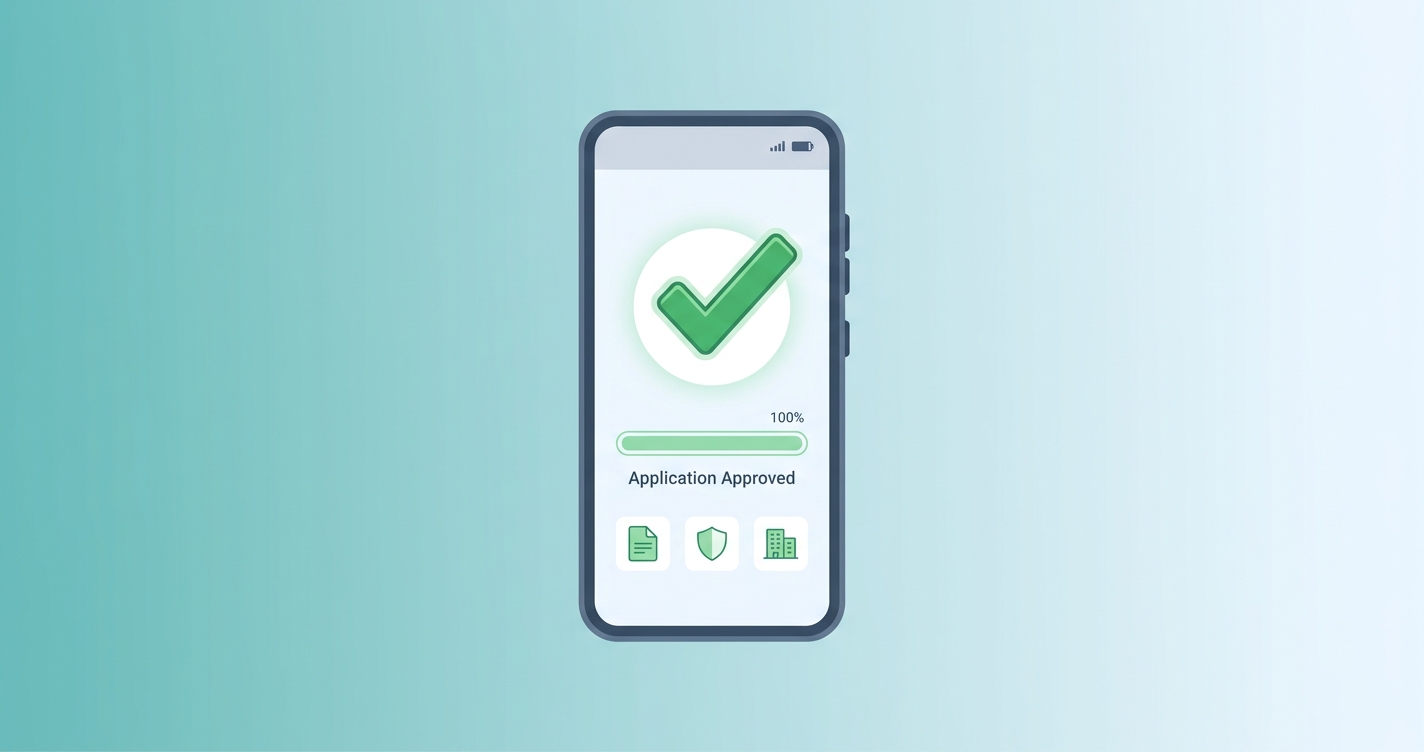
The annual open enrollment period creates a significant operational challenge for group life insurance carriers. For employees, it represents a narrow window to secure or increase coverage for their families. Many seek amounts above the guaranteed issue limit, triggering a requirement for Evidence of Insurability (EOI). Traditionally, this has meant a slow, cumbersome process involving paper forms, paramedical exams, and fluid samples, creating friction for applicants and administrative burdens for carriers. This delay jeopardizes application completion, as employees who want higher voluntary life coverage often abandon the process when faced with a lengthy medical workup. The central issue is speed. For carriers, efficiently processing these applications during a compressed timeframe is critical for both customer satisfaction and capitalizing on the demand for voluntary benefits.
A new approach, centered on digital health screening, is fundamentally changing how carriers can achieve voluntary life coverage fast approval. By replacing traditional, high-friction evidence gathering with scalable technology, insurers can make simplified underwriting decisions more quickly, increasing placement rates and improving the overall employee experience.
"More than half of American consumers are more likely to purchase life insurance with accelerated underwriting due to its speed, ease, and objectivity." - LIMRA, 2022
The digital shift in underwriting for fast approval
The core challenge in voluntary benefits enrollment has always been the trade-off between risk assessment and speed. For amounts requiring EOI, underwriters need data to accurately price risk. The traditional methods, while thorough, are not built for the volume and time sensitivity of open enrollment. A request for a $250,000 voluntary life policy could be held up for weeks waiting for an available nurse, lab processing, and manual review of the results. This friction leads to application drop-off and frustrates employees, employers, and brokers alike.
The pursuit of voluntary life coverage fast approval has led to the adoption of digital health screening solutions. Instead of scheduling an in-person exam, an employee can complete a comprehensive health assessment using a device they already own: their smartphone. Through a secure, private application, the employee completes a health questionnaire and uses the phone's camera to capture key biometric data. This information is then securely transmitted to the carrier's underwriting platform, allowing for a decision in a fraction of the time required by legacy methods. This Accelerates the timeline. Meets employee expectations for modern, digital-first experiences. The process is less invasive, more convenient, and respects the employee's time, dramatically reducing the likelihood of application abandonment.
How smartphone screening gathers underwriting data
The technology behind this new model relies on a combination of validated scientific methods adapted for mobile devices. The primary technology is often remote photoplethysmography (rPPG).
-
Remote Photoplethysmography (rPPG): This technique uses the smartphone's camera to detect subtle changes in the color of the skin on a person's face. These changes, invisible to the naked eye, correspond to the pulsing of blood through the capillaries. By analyzing this video feed, algorithms can calculate vital signs like resting heart rate and, in some models, blood pressure.
-
Facial Analytics: Advanced algorithms also analyze the facial structure to estimate other health risk indicators, such as Body Mass Index (BMI) and physiological age, providing additional inputs for the underwriting model without requiring a physical measurement.
This data, collected in minutes, gives underwriters a risk assessment profile that is sufficient for many simplified underwriting decisions, particularly for the coverage amounts typical in voluntary life plans.
| Feature | Traditional Underwriting | Digital Health Screening |
|---|---|---|
| Time to Decision | Weeks to months | Minutes to days |
| Applicant Effort | High (scheduling, travel, exam) | Low (5-10 minute scan at home) |
| Data Collection | Manual, in-person paramedical exam | Automated, remote via smartphone |
| Scalability | Low (limited by examiner availability) | High (can be done by thousands concurrently) |
| Cost per Applicant | High ($150-$250) | Low |
| Employee Experience | Invasive, inconvenient | Private, convenient, fast |
Industry Applications
The move toward digital screening has distinct advantages for all parties involved in the group benefits ecosystem. It addresses core operational and strategic goals for carriers, consultants, and the employers they serve.
For insurance carriers
For group life carriers, the primary benefits are economic and operational. Digital screening dramatically lowers the cost of underwriting for voluntary coverage by eliminating the expense of paramedical exams. It also increases the top line by improving application completion rates. By making the process faster and easier, carriers can convert more interested employees into policyholders, growing the overall in-force block of business. This speed allows underwriting teams to handle the surge of open enrollment applications without a linear increase in headcount.
For benefits consultants and brokers
Consultants and brokers are constantly seeking ways to add value and differentiate their services. Recommending and implementing a digital screening solution is a clear differentiator. It demonstrates a forward-thinking approach that uses technology to solve a common pain point for their employer clients and the employees. A smoother, faster enrollment process for a popular benefit like voluntary life reflects positively on the consultant and strengthens the client relationship.
For employers and their employees
Employers benefit from a more satisfied workforce. When employees can easily secure the financial protection they want for their families, it enhances the value of the company's benefits package. For the employee, the process is transformed from a burdensome medical errand into a quick, private, and empowering digital interaction. This positive experience during open enrollment can boost overall engagement with the benefits program.
Current research and evidence
The insurance industry's shift towards accelerated underwriting is well-documented. The Society of Actuaries (SOA) "2022 Accelerated Underwriting Practices Survey Report" confirmed that the vast majority of carriers were actively implementing or expanding accelerated programs, driven by consumer demand for speed and convenience.
The technology enabling this shift is also the subject of growing academic validation. The use of smartphone cameras for biometric assessment, particularly rPPG, has been analyzed in numerous studies. A 2023 study published on the pre-print server medRxiv investigated the accuracy of a smartphone application using this technology and found high predictive accuracy for key vital signs compared to standard medical devices, including heart rate (97.34%), systolic blood pressure (93.94%), and diastolic blood pressure (92.95%). Researchers from institutions like RGA have also published papers on how facial analytics can be used in "augmented underwriting" to generate reliable risk indicators. While not a replacement for a full clinical workup for all cases, this body of research provides strong evidence that for the specific purpose of simplified underwriting in a voluntary benefits context, the data is robust and predictive.
The future of voluntary life underwriting
The adoption of digital health screening is the beginning of a broader transformation. The future of voluntary life underwriting will likely involve greater personalization and integration. As AI models become more sophisticated, they will be able to process digital screening data alongside other approved data sources to provide even more nuanced and instantaneous underwriting decisions. We can also expect deeper integrations with benefits administration and wellness platforms, creating a more seamless data flow that reduces redundant requests for information and provides a holistic view of population risk for carriers. The goal remains the same: making it easier for people to get the coverage they need, and digital tools are paving the way.
Frequently asked questions
Q: Is a digital health scan the same as a full medical exam?
A: No. A digital health scan is a screening and risk assessment tool, not a diagnostic medical exam. It collects specific biometric indicators for the purpose of simplified insurance underwriting. It is not a substitute for a comprehensive examination by a physician.
Q: How is my personal health information kept secure?
A: Reputable digital screening platforms operate under strict, consent-based models and comply with regulations like HIPAA. Data is encrypted during transmission and storage, and access is restricted to authorized underwriting personnel. The data is used only for the purpose of securing insurance coverage.
Q: Can I still be declined for coverage with a digital scan?
A: Yes. A digital scan provides a faster and more convenient way to submit evidence of insurability, but it does not guarantee approval. It is still an underwriting process where risk is being evaluated. The technology accelerates the decision, whether it is an approval, a request for more information, or a declination based on the carrier's underwriting guidelines.
The challenges of open enrollment require modern solutions. As carriers and benefits leaders look to improve the process for securing voluntary life coverage, the adoption of digital health screening technology is proving to be a critical step. Circadify is at the forefront of this space, developing scalable solutions that help carriers meet the demand for faster, more efficient underwriting. To learn more about how this technology can be deployed for your group life products, explore our pilot programs at circadify.com/industries/payers-insurance.