Is the wellness scan my employer wants actually safe to do?
An analysis of the technology, accuracy, and data privacy of camera-based workplace wellness scans. Learn how your information is protected.
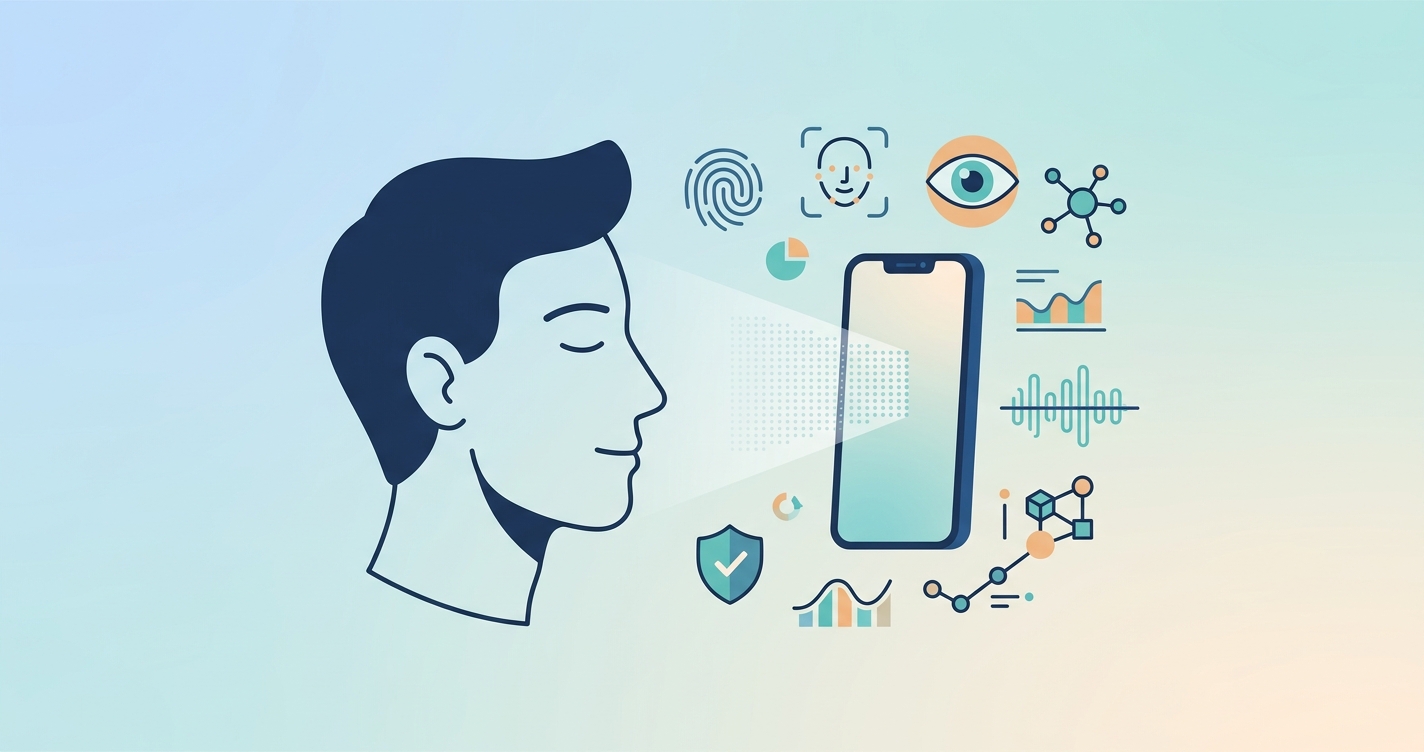
When your employer introduces a new "wellness scan" that uses your phone or computer camera to assess your health, it's natural to have questions. Is this technology accurate? Is it secure? Most importantly, is it safe? The short answer is that the technology is designed with multiple layers of safety, from the physical process to data security. These systems represent a significant shift in how group benefits providers and employers approach health and wellness, moving from infrequent, high-effort clinical screenings to convenient, low-friction digital assessments. The core technology, known as remote photoplethysmography (rPPG), is entirely contactless and analyzes light reflected from your skin to measure key vital signs. Understanding how it works is the first step in verifying workplace wellness scan safety.
"A 2023 report highlighted a significant perception gap in the adoption of new health technologies: 74% of employees expressed concerns about data security related to health monitoring technologies, even while acknowledging the potential benefits."
Understanding workplace wellness scan safety and technology
The central concern for many employees is the safety and accuracy of a camera-based scan. Unlike traditional medical devices, nothing touches your body. The scan is purely optical. The technology, remote photoplethysmography (rPPG), uses the camera on a standard smartphone or computer to detect minute, imperceptible changes in the color of your skin. These changes correspond to the pulsing of blood through the vessels just beneath the surface. By analyzing the frequency and pattern of these changes in the video feed, algorithms can calculate vital signs like heart rate, respiratory rate, and even blood pressure variability.
From a physical standpoint, the process is as safe as taking a selfie. No new or unusual energy is emitted by the device; it simply uses the existing camera and ambient light. The "safety" question then shifts to data and accuracy, which is where technical and regulatory standards come into play. For benefits carriers and TPAs evaluating these solutions, the focus is on the validation of these algorithms against clinical benchmarks and the robust data governance frameworks that protect employee information. The primary goal of these screenings in a group context is not to diagnose individuals but to gather anonymized, aggregated data to better understand population-kind risk and wellness opportunities, ensuring workplace wellness scan safety is maintained at a population level.
| Feature | Contactless Wellness Scan (rPPG) | Traditional Onsite Biometric Screening |
|---|---|---|
| Method | Remote photoplethysmography (rPPG) via camera | Physical measurement (finger prick, blood pressure cuff) |
| Equipment | Smartphone, tablet, or computer with a camera | Blood pressure monitor, cholesterol meter, glucose meter |
| Physical Contact | None, entirely contactless | Required (cuff inflation, needle/lancet) |
| Location | Any private, well-lit space | Onsite clinic, pharmacy, or designated event space |
| Data Collection Time | Typically 30-60 seconds | 10-15 minutes per participant |
| Data Security | Encrypted data transmitted to a secure cloud; PHI protected under HIPAA | Paper forms and digital entry; subject to HIPAA if part of a health plan |
| Employee Experience | High convenience, low friction, can be done anytime | Requires scheduling, travel, and potential waiting time |
Industry applications in group benefits
While the experience of a wellness scan is individual, its primary application and value are at the population level. For group insurance carriers, third-party administrators (TPAs), and benefits consultants, this technology opens new avenues for risk assessment and program management.
Streamlining enrollment data
Acquiring health data during open enrollment or for new group life applications has always been a logistical challenge. Contactless scans allow for the collection of baseline biometric data at scale, without the costs and complexity of deploying onsite nurses or coordinating pharmacy visits. This data provides a more current and dynamic view of a group's risk profile than relying solely on demographic data and medical claims history.
Enhancing population health insights
Aggregated, anonymized data from wellness scans can reveal trends across an employee population. Carriers and wellness program administrators can identify potential risk factors for chronic conditions like hypertension or cardiovascular disease and proactively deploy targeted interventions. This data-driven approach allows for more effective allocation of resources for wellness initiatives.
Reducing underwriting and administrative expenses
The cost of traditional underwriting for group life and disability insurance can be substantial, involving medical exams and lab tests. Digital, contactless screening provides key data points that can reduce the need for these expensive, high-touch processes, particularly for certain population segments or coverage levels. This efficiency translates into lower administrative costs for the carrier and a faster, simpler experience for the employee.
Current research and evidence
The viability of rPPG technology is supported by a growing body of scientific research. While it is not a diagnostic tool intended to replace a physician's assessment, studies have validated its accuracy for screening-level measurements. Research published by teams at institutions like the University of South Australia and in journals from the Institute of Electrical and Electronics Engineers (IEEE) has consistently shown high accuracy for certain vitals.
A 2022 study on the clinical validation of rPPG software for pulse rate monitoring in cardiovascular disease patients found a Mean Absolute Error (MAE) of just 1.06 beats per minute when compared to traditional electrocardiography (ECG). Other studies have reported SpO2 (blood oxygen saturation) measurements with an MAE of around 2-3%.
Measuring blood pressure with rPPG is more complex and an active area of research. However, current systems show strong promise in identifying broad categories such as normal, elevated, or hypertensive states, which is often sufficient for initial risk stratification in a wellness context. The key is that these technologies are rigorously tested against clinical-grade devices, and their performance is well-documented.
The future of contactless screening
The trajectory of contactless wellness technology points toward broader applications and greater integration. As algorithms become more sophisticated, the number of biomarkers that can be reliably assessed via camera will likely expand. The future is less about one-off annual screenings and more about providing individuals with tools to monitor their own health trends over time, with their consent. For employers and carriers, this means the potential for more dynamic risk models and wellness programs that can adapt in near-real-time to the health of the population. The focus on workplace wellness scan safety will continue to drive advancements in encryption, data anonymization, and user control.
Frequently asked questions
-
Is a camera-based wellness scan physically safe? Yes, it is completely safe from a physical standpoint. The technology is passive, using a standard camera to analyze light. It does not emit any energy, waves, or radiation. Nothing touches your body.
-
Can my employer see my individual health results? No. Workplace wellness programs that are part of a group health plan are typically subject to the Health Insurance Portability and Accountability Act (HIPAA). This means your individual results are considered Protected Health Information (PHI) and cannot be shared with your employer. Data is aggregated and de-identified to show population-level trends, not individual data points.
-
How accurate is a wellness scan compared to a doctor's visit? It's important to differentiate between screening and diagnosis. A wellness scan provides a convenient, accessible health screening that is highly accurate for vitals like heart rate. For example, studies show pulse rate accuracy is often within 1-2 beats per minute of an ECG. However, it is not a diagnostic tool and does not replace a comprehensive examination by a healthcare professional. It is best used for tracking trends and identifying potential health risks that may warrant a clinical follow-up.
The evolution of group health screening is moving toward more accessible, less invasive methods that respect employee privacy while delivering valuable insights for population health management. For group carriers, TPAs, and benefits advisors, understanding the technology and the data governance behind it is key to using these powerful new tools. Circadify is actively developing solutions to address this growing need. To explore a new way of assessing risk and engaging members, learn more about our enterprise pilot program at circadify.com/industries/payers-insurance.